Three stucco situations are genuine emergencies in NYC: material that has fallen or is loose above a sidewalk, water actively entering the wall, and a violation with a deadline running. MNM Construction Stucco responds same day across NYC and Long Island at (516) 713-9199.
Three Situations That Are Actually Emergencies
Most stucco problems can wait for a normal appointment, and we will tell you so on the phone rather than charging you an emergency rate to hear it. Three situations genuinely cannot wait.
Material has fallen, or is visibly loose above a sidewalk, an entrance, or a neighbour's property. This is the one that stops being only your problem. A loose section over a public sidewalk is what generates a DOB complaint, and once a complaint exists the clock belongs to the city rather than to you.
Water is actively entering the building through the wall. Not a stain from last month. Water coming in now, while the weather is doing whatever it is doing.
A violation with a correction deadline is running against you. That deadline does not pause while you collect quotes.
What to Do Before Anyone Arrives
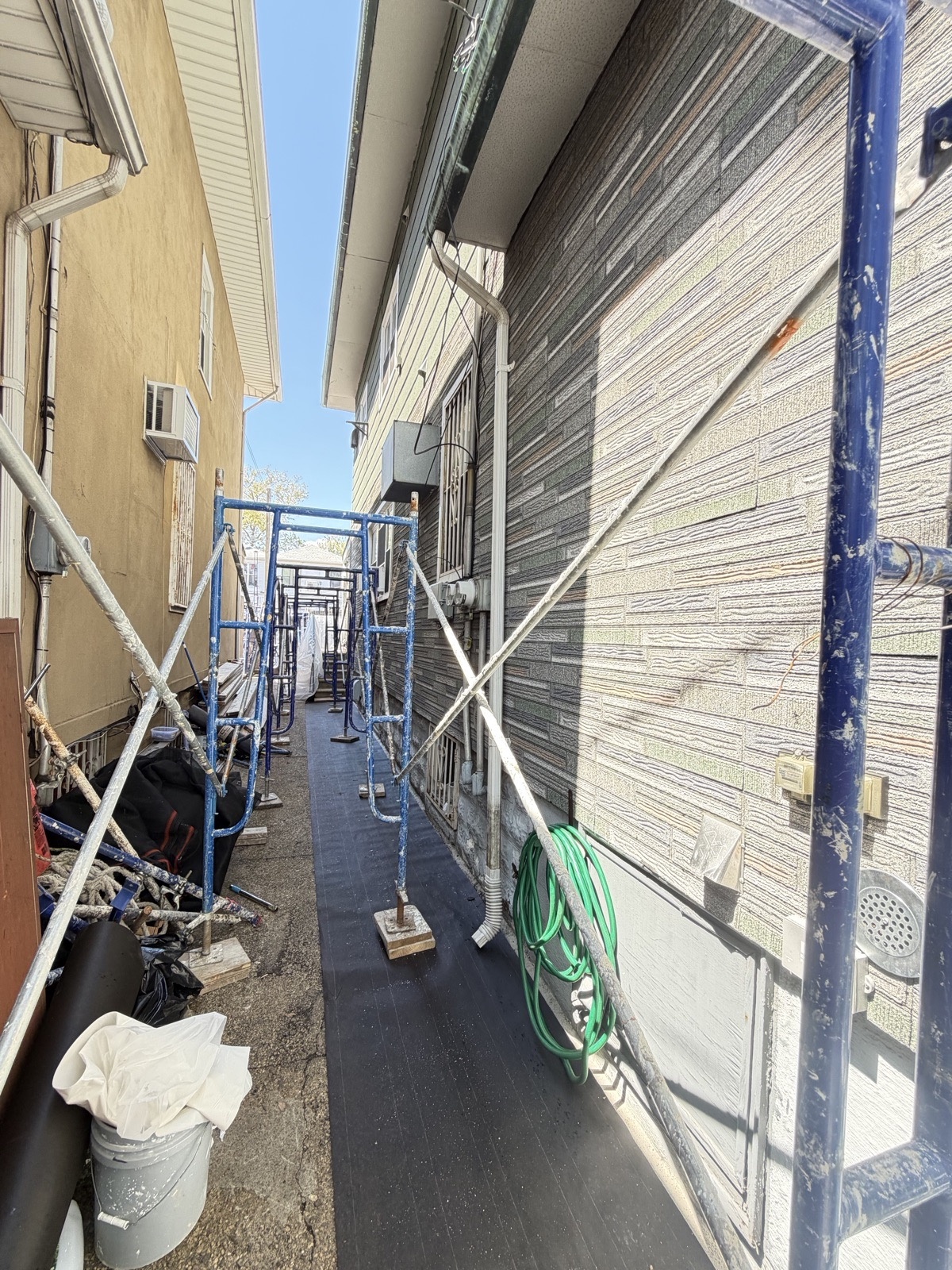
Four things, and they take minutes. Keep people away from the area underneath, because the next piece comes down without warning. Photograph everything before anything is touched or cleaned, because that is what an insurer and the city both work from. If water is entering, move what is under it and contain it. And if any of the loose material is over a public sidewalk, put something between it and pedestrians, even temporarily.
What not to do is pull at loose stucco yourself to see how bad it is. The piece that is still hanging is usually attached to more than you can see, and bringing it down by hand on a sidewalk is how a repair becomes a liability claim.
What We Actually Do First
Making it safe and making it finished are two different jobs, and on an emergency call only the first one happens that day. We remove what is loose rather than leaving it to decide for itself, protect what is below, and stabilise the edges of the opening so the failure stops spreading.
Then the wall gets covered. An exposed substrate takes on water fast, and in October that water is going to freeze inside the wall within weeks. A properly fastened and sealed temporary cover is a real repair step, not a formality, and it is the thing that keeps a contained problem contained until the permanent work can cure properly.
Why the Permanent Repair Usually Waits
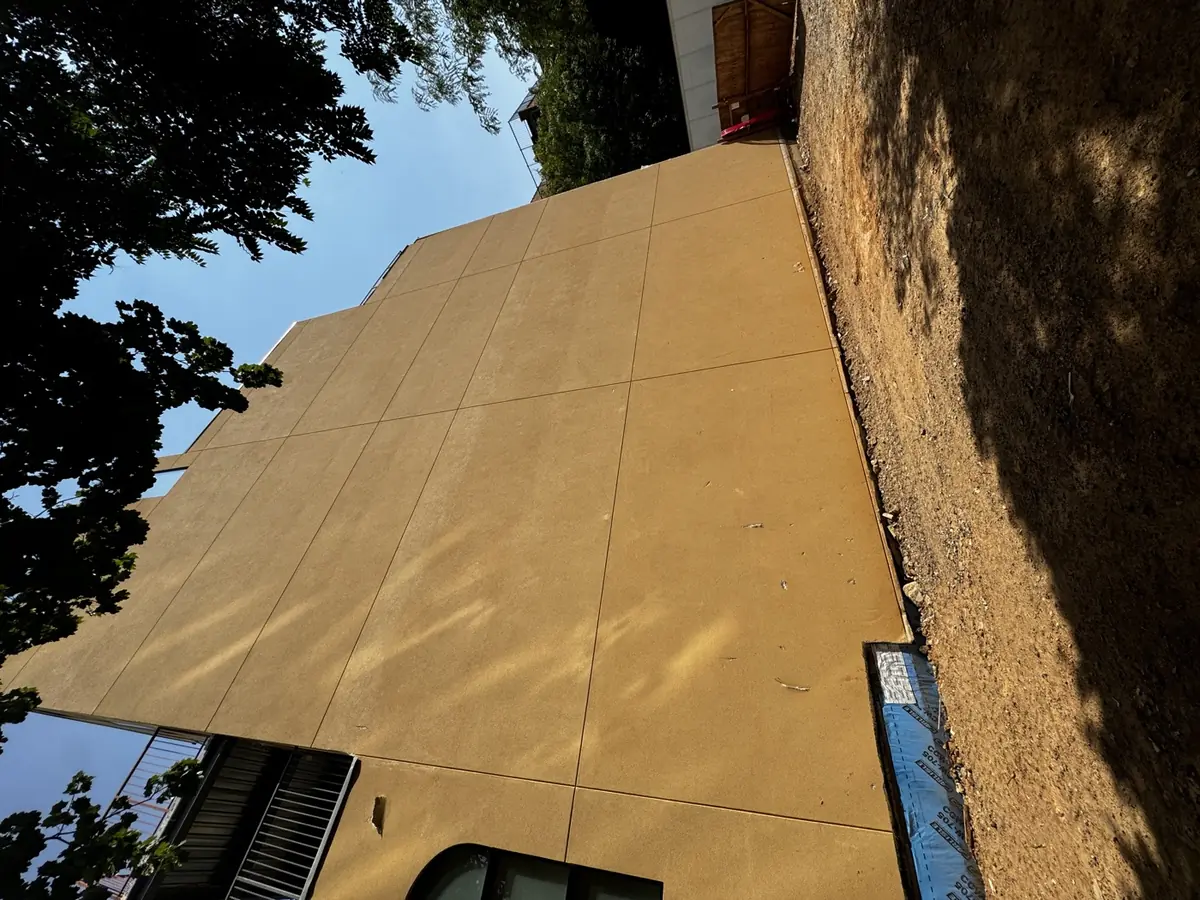
Stucco needs the air and the surface to hold above roughly 40 degrees while it cures, and a cure that freezes partway through never reaches strength. It looks finished and it fails in spring.
So in cold weather the honest sequence is: make it safe now, protect it properly, and apply the finished repair when the temperature allows, at the price we quoted you. Anyone who tells you in January that they can do the full application outdoors with no enclosure is either not going to do it properly or is not going to do it at all.
Small repairs are a different matter. With a heated enclosure and a cold weather mix we can complete limited areas through the winter, and we will tell you which category your wall is in.
If the City Is Already Involved
A DOB complaint or violation changes the order of operations but not the work. The condition has to be corrected, and then the correction has to be documented in the way the filing requires. Those are two separate things, and the one people miss is the second. We have met owners who did the repair properly and still carried the violation for months because nobody filed what closes it out.
We handle the physical work and tell you exactly what the filing needs. Our guide to clearing a stucco violation in NYC walks through the paperwork side.
About Insurance
Sudden damage from a storm or an impact is generally covered. A wall that deteriorated over several years is generally not, and gets classified as deferred maintenance. We document the condition at the time of the call, before anything is disturbed, with dated photographs, because that is what an adjuster works from and it is what almost everyone forgets in the moment.
What we will not do is describe a worn out wall as storm damage. It gets the claim denied and flagged, and it is not a service to you.
Something loose, falling, or letting water in right now? Call (516) 713-9199. We triage on the phone first so the crew arrives with the right material, and we will tell you honestly if it can wait for a normal booking. See also our emergency stucco service and what can safely wait until spring.
Frequently Asked Questions
What counts as a stucco emergency?
Three things. Material that has already fallen or is visibly loose above a sidewalk, entrance or neighbouring property. Water actively entering the building through the wall right now. And a DOB violation with a correction deadline running against you. Hairline cracks, staining, algae and efflorescence are not emergencies and we will tell you that on the phone rather than charging an emergency rate.
How fast can you get here?
Same day across NYC and Long Island for a falling hazard or active water entry. We triage on the phone first so the crew arrives with the right material rather than making a second trip. Call (516) 713-9199. If your situation turns out not to be urgent we will book you normally instead.
What should I do before you arrive?
Keep people away from the area underneath, because the next piece comes down without warning. Photograph everything before anything is touched, since that is what both an insurer and the city work from. Contain any water coming in. If loose material sits above a public sidewalk, put a barrier between it and pedestrians. Do not pull at the loose stucco yourself.
Why do you only make it safe instead of fixing it properly?
Because those are two different jobs and in cold weather only the first can be done well on the day. Stucco needs the air and surface above roughly 40 degrees to cure, and a cure that freezes partway through never reaches strength. It looks finished in January and fails in April. We make it safe, protect it, and apply the permanent repair when it can actually cure.
Stucco fell onto the sidewalk and the city is involved. What now?
Correct the condition, then document the correction the way the filing requires. Those are two separate steps and the second is the one people miss. We have met owners who did the repair properly and still carried the violation for months because nobody filed what closes it out. We do the work and tell you exactly what the filing needs.
Will insurance cover it?
Sudden damage from a storm or an impact is generally covered. A wall that deteriorated over several years generally is not, and gets treated as deferred maintenance. We photograph and document the condition before anything is disturbed, which is what the adjuster works from. We will not describe a worn out wall as storm damage, because that gets the claim denied and flagged.
Can small repairs really be done in winter?
Limited areas, yes, using a heated enclosure and a cold weather mix. A full elevation, no. The difference is whether the cure can be controlled for long enough, and on a whole wall outdoors in January it cannot. We will tell you which category your wall falls into before quoting rather than after.