Cement based stucco needs the wall above 40 degrees during application and for 48 hours after, so base coats often still work into November. Acrylic finish coats need about 50 and should wait. MNM Construction Stucco schedules late season work by elevation and forecast. Free estimate at (516) 713-9199.
The Short Answer
Yes for the base coats, usually. Probably not for an acrylic finish.
That split is the whole thing, and it is why a contractor telling you flatly that stucco season is over is giving you half the picture, and one telling you November is no problem at all is giving you the other half.
What actually decides it is not the date on the calendar. It is the wall temperature, how long it stays there after the material goes on, and which product you are putting up.
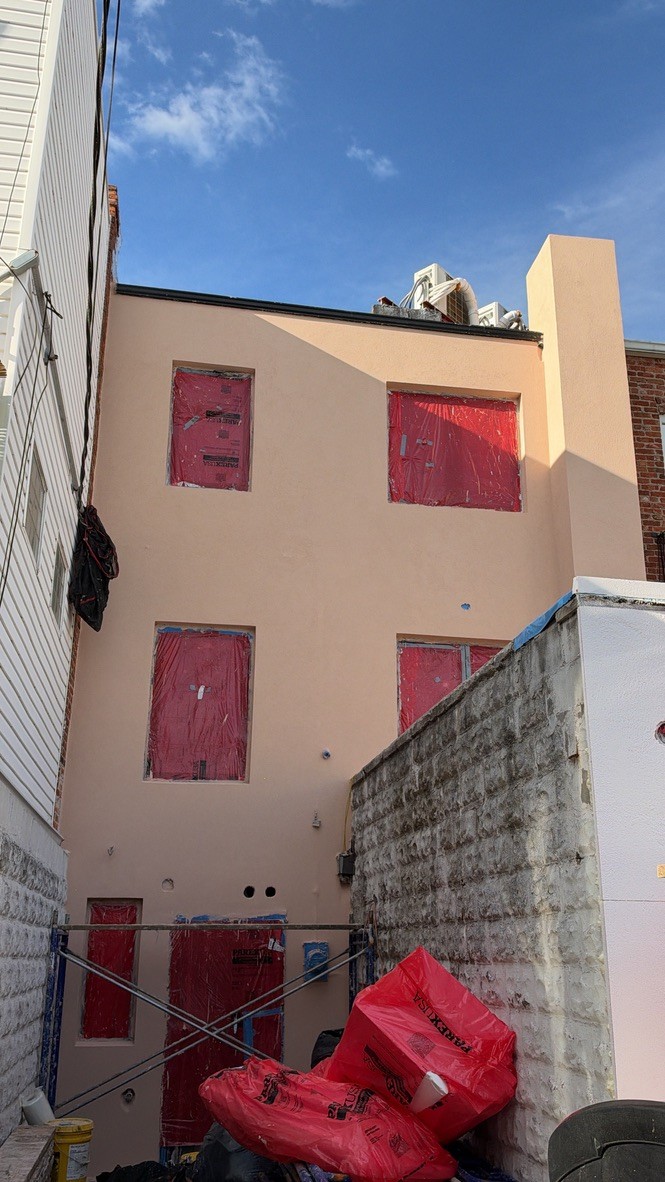
What Cold Does to Cement Based Stucco
Traditional stucco is portland cement. It does not dry, it hydrates. The cement reacts chemically with water and that reaction is what builds strength. Drying is almost incidental.
That reaction is temperature dependent. At seventy degrees it moves along nicely. At forty five it slows considerably. Below about forty it very nearly stops. A coat that is applied and then sits at thirty eight degrees overnight is not curing slowly, it is sitting there barely curing at all.
And if it freezes before it has built meaningful strength, the water inside it expands and ruptures the structure of the material from the inside. It may look acceptable the next morning. It will be weak, it will not bond properly to what is behind it, and it will show up as a debonded section a year or two later.
The standard guidance for portland cement plaster is to keep the work above forty degrees during application and for at least forty eight hours afterwards. Forty and rising is the working rule. Forty and falling at four in the afternoon is not the same thing at all.
Why Acrylic Finishes Are the Real Cut Off
Acrylic and synthetic finish coats are a different material with a different problem.
They do not hydrate, they form a film as water evaporates out of them. Those polymer particles have to flow together and fuse, and below a certain temperature they simply will not do it. The usual requirement is around fifty degrees and rising, held for a good deal longer than the cement coats need.
Apply one too cold and you do not get a failure you can see immediately. You get a finish that never develops its proper strength, with patchy colour, visible lap lines where one section set differently from the next, and poor resistance to water. On a coloured finish the colour variation alone is enough to make the whole elevation a redo.
Late autumn in New York also brings high humidity and weak sun, so evaporation is slow even on a mild day. That combination, cool and damp, is the worst case for an acrylic finish.
This is the coat we will tell you to defer. A base coat left over the winter under the right conditions is not a disaster. A bad finish coat is one you look at every day until it is replaced.
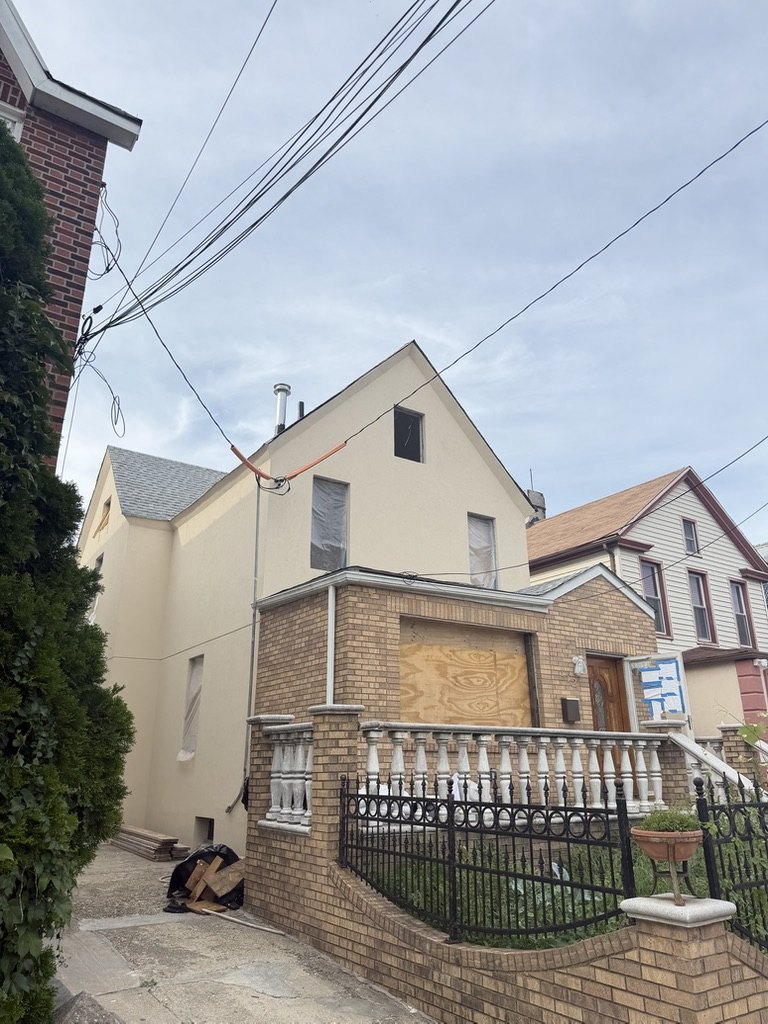
How a November Job Is Actually Run
When we do take work into late autumn, the difference is in the scheduling rather than the materials.
Elevations get picked by orientation. South and west walls take the sun and hold their temperature longest into the afternoon. North elevations in a narrow Brooklyn alley may not get above forty at all in late November. So the south and west go up first and the north waits.
The working window shrinks to the middle of the day. Nothing starts until the frost is off the wall and the surface is genuinely above temperature, which in November is usually around ten. Work stops with enough of the afternoon left for the coat to set before the temperature falls, which is around three. Five hours, not nine.
We stop at a natural break. A scaffold bay, a reveal line, a corner. You never want a cold joint in the middle of a blank wall, because that is where the colour and the texture will differ.
Enclosure and heat when it is worth it. If there is already scaffold up, tarping it and running heat makes a wall that would otherwise be out of the question entirely workable. It costs money and it is not worth it for a small patch, but on a full facade with scaffold already standing it often is.
The forecast runs the schedule. Not the week we would like, the forty eight hours after each coat goes on. That is the window that decides whether it cures or freezes.
What We Will Not Do
We will not put a cement coat on a wall that is going to freeze that night. We will not apply an acrylic finish below its rated temperature and hope. We will not work over a frosted or wet substrate. And we will not start a full facade in the third week of November on the assumption that the weather holds.
If the forecast says it cannot be done properly, the honest move is to say so and to protect what is already there until spring.
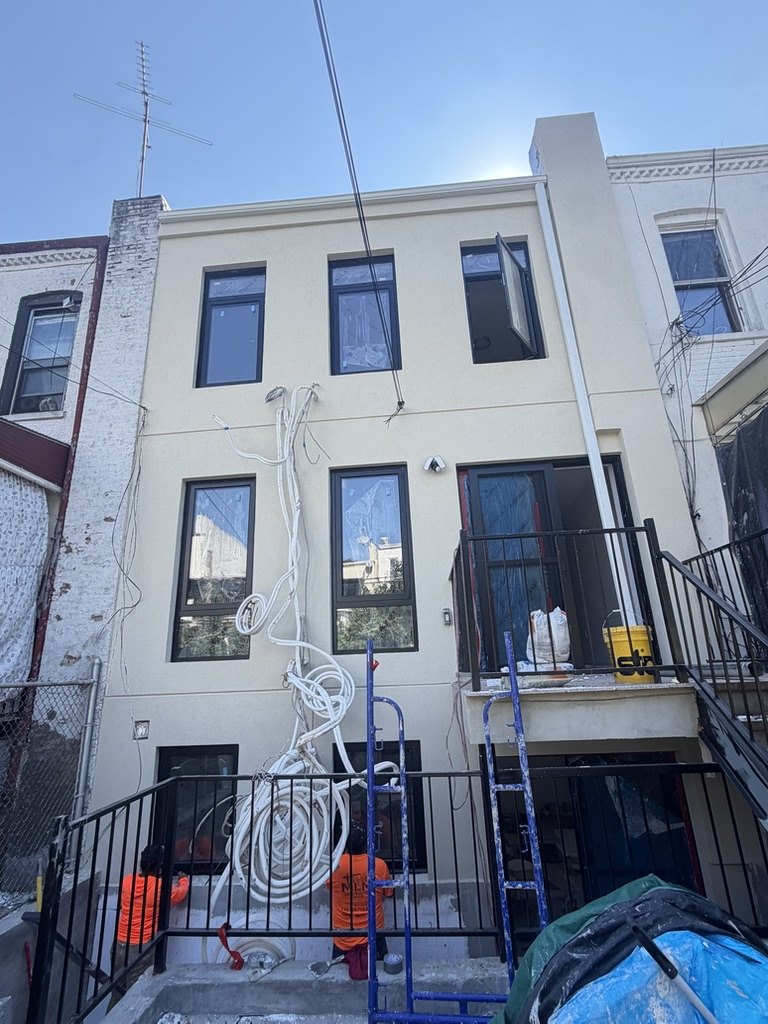
If You Have Damage and It Is Already Late
This is the situation most people are actually in, and it is worth separating from a planned project.
Open stucco going into a New York winter is a genuine problem. Water gets into the wall, freezes, expands and widens everything it finds. A small area of damage in November can be a significantly larger one by March.
The answer is usually not a full repair done badly in the cold. It is a proper temporary protection. Seal the openings, cover the exposed substrate, fix whatever is dumping water onto that section, and stabilise anything loose enough to fall. Then do the real repair in spring under conditions that let it cure.
That approach costs a fraction of a rushed cold weather repair, and unlike the rushed repair it does not have to be done twice. We will quote it as what it is: protection now, repair later.
Planning a Spring Project Instead
If you are looking at a full facade and the calendar has beaten you, the useful thing to do with the winter is the preparation rather than the work.
Get the survey done now while the wall is telling you the truth. Autumn and winter are when water problems are most visible, because that is when the wall is wet and the damp patches show. A survey in a dry August misses things that are obvious in November.
Settle the scope, the system and the colour over the winter, and have the scaffold and the crew booked for the first workable window in spring rather than joining the queue in May. Call (516) 713-9199 or request a free written quote. Related: the best time of year to stucco in NYC and what can honestly wait until spring.
Frequently Asked Questions
Can you stucco a house in New York in November?
Base coats usually yes, acrylic finish coats usually no. Portland cement stucco needs the wall above forty degrees during application and for about forty eight hours afterwards. Acrylic finishes generally need fifty degrees and rising for longer. In November the cement coats are often workable in a midday window and the finish is the thing to defer.
What temperature is too cold for stucco?
Below forty degrees cement based stucco very nearly stops hydrating, which is the chemical reaction that builds its strength. If it freezes before it has gained strength the water inside expands and ruptures the material from within. Acrylic finish coats have a higher floor, usually around fifty degrees and rising, because the polymer has to form a film.
What happens if stucco freezes before it cures?
The water inside it expands and breaks up the structure of the material while it is still soft. It can look acceptable the following morning, but it never reaches proper strength and it will not bond reliably to the substrate. The usual outcome is a section that sounds hollow and debonds a year or two later.
Why will acrylic finish not go on in cold weather?
Because it forms a film rather than hydrating. The polymer particles have to flow together and fuse as water evaporates, and below roughly fifty degrees they will not. The result is patchy colour, visible lap lines where sections set differently, and poor water resistance. On a coloured finish the colour variation alone usually means redoing the elevation.
Can you use heat and enclosure to stucco in winter?
Yes, and on a full facade with scaffold already standing it is often worth it. Tarping the scaffold and running heat keeps the wall and the fresh coat above temperature through the critical first forty eight hours. It adds cost, so it rarely makes sense for a small patch, but it makes an otherwise impossible facade entirely workable.
My stucco is damaged and it is already November. What should I do?
Protect it now and repair it in spring. Seal the openings, cover exposed substrate, fix whatever is draining water onto that section and stabilise anything loose enough to fall. Open stucco going into a New York winter takes in water that freezes and widens the damage. Protection costs a fraction of a rushed cold weather repair and does not need redoing.
Is winter a bad time to get a stucco survey?
It is the best time. Water problems are most visible when the wall is wet, so autumn and winter show you damp patches, efflorescence and staining that a dry August survey misses entirely. Survey now, settle the scope and colour over the winter, and book the first workable window in spring instead of joining the May queue.