Stucco is porous by design, so water entering the surface is normal. What keeps an NYC building dry is the weather resistive barrier behind the lath, a drainage path, flashing at every opening, and gutters that do not overflow. MNM Construction Stucco traces it free at (516) 713-9199.
A Stucco Wall Is Not Waterproof. It Is Water Managing
This is the single idea that explains almost every stucco failure we are called to in NYC, and almost nobody outside the trade has heard it.
Stucco is porous. It always was. Water gets into the surface in a wind driven rain and that is normal and expected. What keeps the building dry is not the stucco itself, it is the layer behind it and the path water takes back out. Get that layer and that path right and a wall lasts fifty years. Get them wrong and no amount of sealer on the outside saves it.
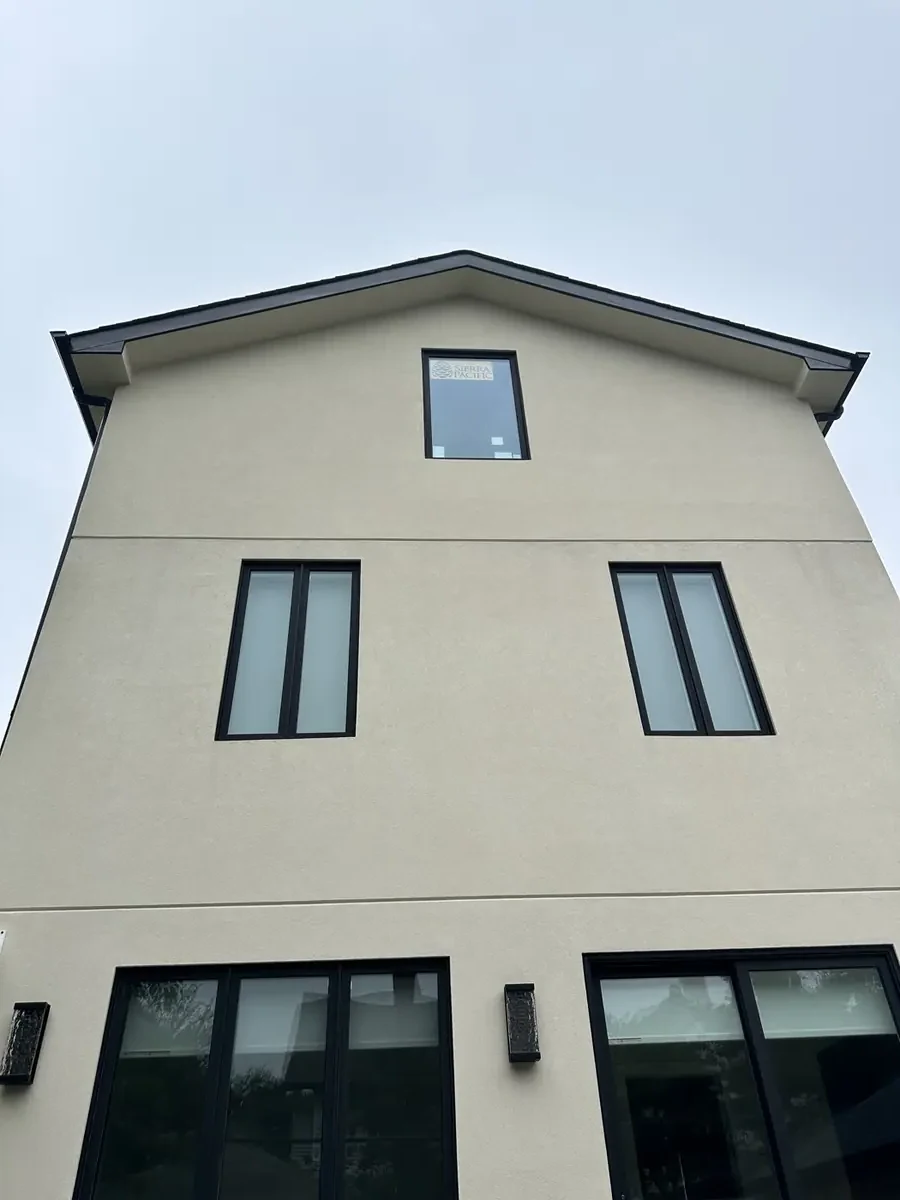
The Four Things That Actually Keep Water Out
The weather resistive barrier. The membrane behind the lath. This is the real waterproofing. On a correctly built wall, water that passes the stucco hits this layer and runs down it rather than into the sheathing.
A drainage path. Water on that barrier needs somewhere to go. On modern assemblies that means a drainage plane and a weep at the base. Walls built with no exit are the ones where the sheathing rots while the finish outside still looks perfect.
Flashing at every opening. Window heads, door heads, the joint where a garage or extension meets the house, and the roof to wall transition. These are the holes in the system. A wall is only as waterproof as its worst opening, and on older NYC construction that is usually a window head with no flashing at all.
A way to stop water arriving in bulk. Gutters that do not overflow, downspouts that discharge away from the wall, sprinklers not aimed at the house, soil pulled back from the base. More stucco in this city is destroyed by a leaking gutter than by any defect in the stucco.
Why Sealers Are Sold So Often and Work So Rarely
A masonry sealer rolled onto the outside of a wall is the most commonly sold stucco waterproofing product and the one we most often advise against as a primary fix.
The reason is vapor. Stucco needs to dry outward. A wall takes on some moisture from rain, from humidity, sometimes from inside the building, and it releases it through the surface. Put a low permeability coating over that surface and you have trapped it. The water that is already in there, and the water that will still get in through the unflashed window head, now has nowhere to go. It sits against the substrate, and in a freeze it expands.
Breathable coatings exist and have a real place. A silicate or a high perm elastomeric over a sound, properly flashed wall is maintenance that extends the finish. On a wall with a water entry problem, it is a lid.

How We Find Where It Is Actually Getting In
Staining almost never marks the entry point. Water travels inside a wall, along the back of the lath or down the framing, and surfaces lower and often several feet sideways. Chasing the stain is how a wall gets repaired three times by three contractors.
- Start above. Follow the wall upward from the damage. Nine times out of ten there is a gutter joint, a downspout elbow, a parapet or a roof to wall detail directly over it.
- Sound the area. A drum sound means the stucco has already released and water is behind it now.
- Moisture readings. On EIFS and one coat systems especially, readings tell you what the surface will not.
- Selective probe openings. At the window head, at the base, at any penetration. Small, deliberate, and far cheaper than guessing.
- Check the bottom eighteen inches. Splashback and sprinklers do their damage in the band nobody inspects.
What Waterproofing Work Actually Involves
On an existing wall the honest sequence is: stop the bulk water arriving, correct the flashing at openings, repair or rebuild whatever has debonded, and only then treat the surface. Any order other than that produces a repair that fails on schedule.
On a parapet, which is where we find the most water entry on NYC buildings, the coping, the joints and the roof to wall transition get treated as one detail rather than three small repairs. Water entering a parapet runs down inside the wall and appears two floors below, nowhere near the top.

Related reading: stucco water damage repair, should you seal your stucco, how a clogged gutter wrecks a wall, and our stucco waterproofing service.
Water getting in somewhere and you cannot find where? Call (516) 713-9199 or request a free written quote. We trace it before we quote anything.
Frequently Asked Questions
Is stucco waterproof?
No, and it was never meant to be. Stucco is porous and water enters the surface in wind driven rain by design. What keeps the building dry is the weather resistive barrier behind the lath, a drainage path so that water can get back out, and flashing at every opening. A wall is only as waterproof as its worst detail, not as its surface.
Will a waterproof sealer fix my leaking stucco?
Usually not, and often it makes things worse. Stucco needs to dry outward. A low permeability coating traps the moisture already in the wall plus whatever still enters through an unflashed window head, and in a freeze that trapped water expands. Breathable silicate or high perm elastomeric coatings have a real place as maintenance on a sound, properly flashed wall. On a wall with an entry problem they are a lid.
Where does water usually get into a stucco wall in NYC?
Four places account for most of it. Window and door heads with no flashing or failed flashing. The joint where an extension, garage or addition meets the original wall. The parapet and roof to wall transition on flat roofed buildings. And bulk water from a gutter that overflows or a downspout that discharges against the wall. The stucco field itself is rarely the culprit.
Why is the damage not where the water gets in?
Because water travels. It runs down the back of the lath or along the framing and surfaces lower, and often several feet sideways. That is why chasing the stain fails: the repair is correct, the entry point is untouched, and it comes back. We follow the wall upward from the damage before quoting anything.
How do you find the leak without opening the whole wall?
Sounding tells us what has already debonded. Moisture readings tell us what the surface will not, particularly on EIFS and one coat systems. Then we make small, deliberate probe openings at the points water most likely enters: the window head, the base, and any penetration. That is far cheaper than guessing and far less invasive than opening a whole elevation.
What does stucco waterproofing work cost?
It depends entirely on what the actual fix is, which is why we trace first. Correcting flashing at openings is usually a few hundred to a few thousand dollars per elevation. Parapet and roof to wall waterproofing is typically quoted per linear foot. A breathable coating over a sound wall runs $3.50 to $7 per square foot. Fixing the gutter above, which is often the real answer, costs a fraction of any of it.
Can waterproofing be done in winter?
Flashing corrections and gutter work, yes, those are not temperature dependent. Coatings and stucco repairs need the air and surface above roughly 40 degrees to cure properly, so those wait. If water is actively entering we make it safe and protect it now and apply the finished work when it can cure, rather than installing something that fails by spring.