Stucco that is wet at dawn and dry by early afternoon is harmless autumn condensation. A patch still dark at 2pm in the same spot every day is water inside the wall, and NYC gives you dozens of freeze thaw cycles before March. MNM Construction Stucco checks it free at (516) 713-9199.
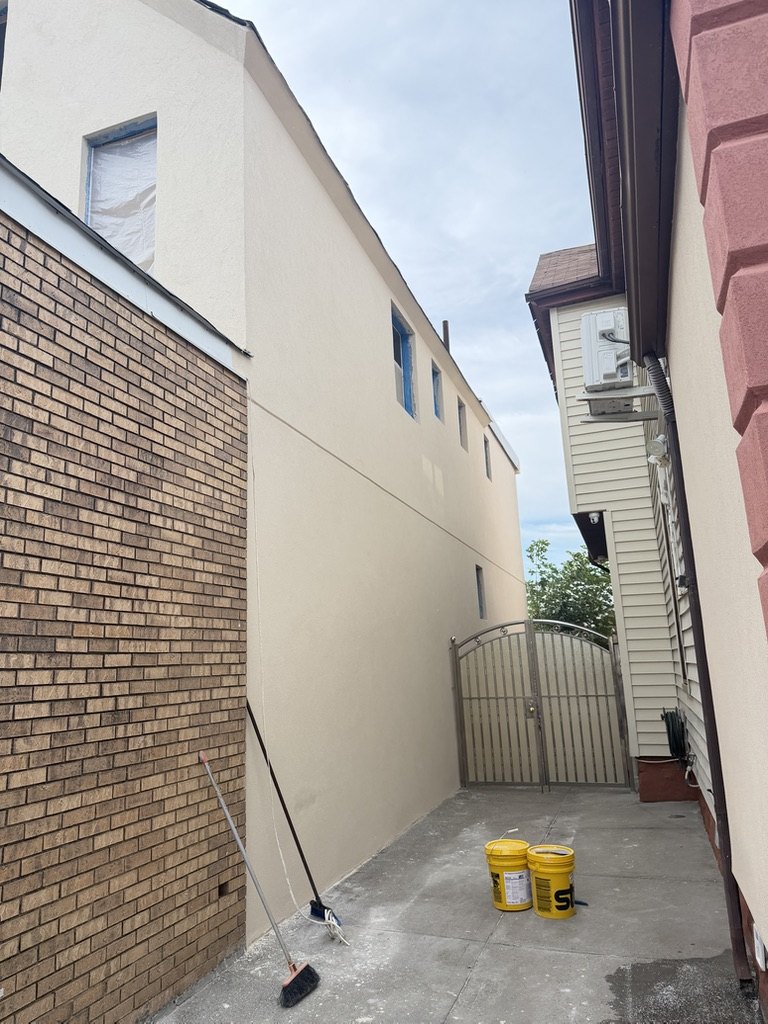
Why Your Wall Is Wet at Seven in the Morning
Call it what it is first, because the usual answer is completely harmless.
On a clear autumn night a wall radiates its heat straight up to the open sky. It gets colder than the air around it. When the surface drops below the dew point, moisture in the air condenses on it exactly the way it does on a car windscreen or a cold glass of water. By morning the whole elevation looks soaked.
This is normal and it happens to every exterior material in New York, not just stucco. Brick does it. Fiber cement does it. It is most obvious on stucco because a light coloured wall shows the change in tone clearly, and most obvious on north and east facing walls because they have had the longest night and get the sun last.
So the fact that your wall is wet in the morning is not the signal. The signal is what happens over the next four hours.
The Test That Costs Nothing
Go and look at the same wall at one or two in the afternoon on a clear day. That is the entire test.
A healthy wall dries evenly. The damp retreats as a front, usually from the top down and from the sunlit side across, and by early afternoon the elevation is a single uniform colour again. Minor variation around a window head or under a sill is normal.
A wall with a problem dries unevenly and leaves islands. One patch stays visibly darker than everything around it, in the same place, day after day. It is not holding dew any more, because the dew is gone from the rest of the wall. It is holding water that came from somewhere else and is now working its way back out through the surface.
That is the distinction. Not wet in the morning. Still wet in the afternoon, in the same spot, repeatedly.
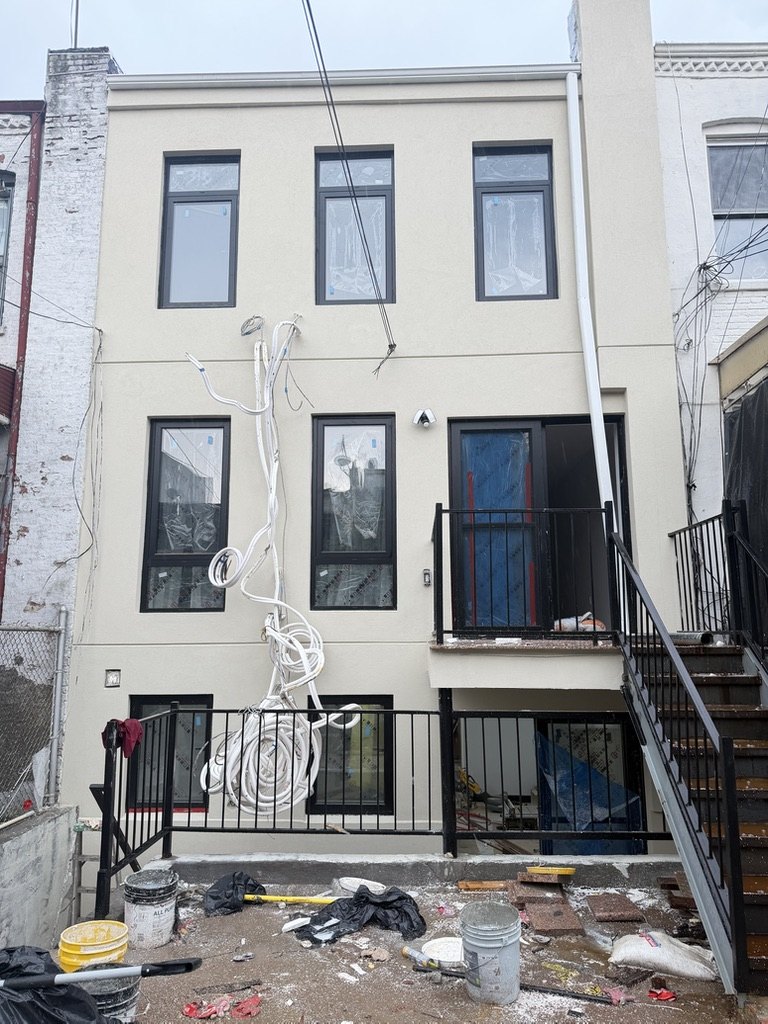
Where the Persistent Patches Show Up
They are not random. After enough of these we can usually guess the location before walking round the building.
Directly under a window sill. Either the sill has no drip edge underneath it, or the sealant at the ends of the sill has failed. Water runs off the glass, hits the sill, and instead of dripping clear it tracks back under and into the wall.
In a vertical stripe below a corner or a joint. That is water getting in at one point above and running down inside the assembly. The stripe is narrow at the top and spreads as it descends.
Along the very bottom of the wall, above grade. Stucco that runs right down into soil or a concrete slab with no gap wicks water upward. This one gets dramatically worse once the ground stays wet through November.
Under a parapet or a coping. The top of a Brooklyn wall is the single most common entry point in this borough and it is the one nobody can see from the ground.
Beside a downspout or where a gutter overflows. We have written separately about what clogged gutters do to stucco, and in October it is the single most common cause we find.
The Other Three Things to Look For
While you are at that wall, check these as well. Any one of them next to a persistent damp patch turns a watch it into a look at it now.
White powder. Chalky white deposits on the surface are efflorescence, salts that were inside the wall and have been carried to the face by water moving through the material. Efflorescence is not damage in itself. It is evidence. It means water is travelling through that wall, and it tells you roughly where it is coming out.
A hollow sound. Tap across the wall with a knuckle or the handle of a screwdriver. Sound stucco knocks hard and flat. A section that drums has released from what is behind it. Hollow plus persistently damp is the combination that does not survive a winter.
A bulge. Sight along the wall from one end, almost edge on. Bulges are nearly invisible face on and obvious from an angle. A bulge means the material is no longer flat against the substrate and water has room to sit behind it.
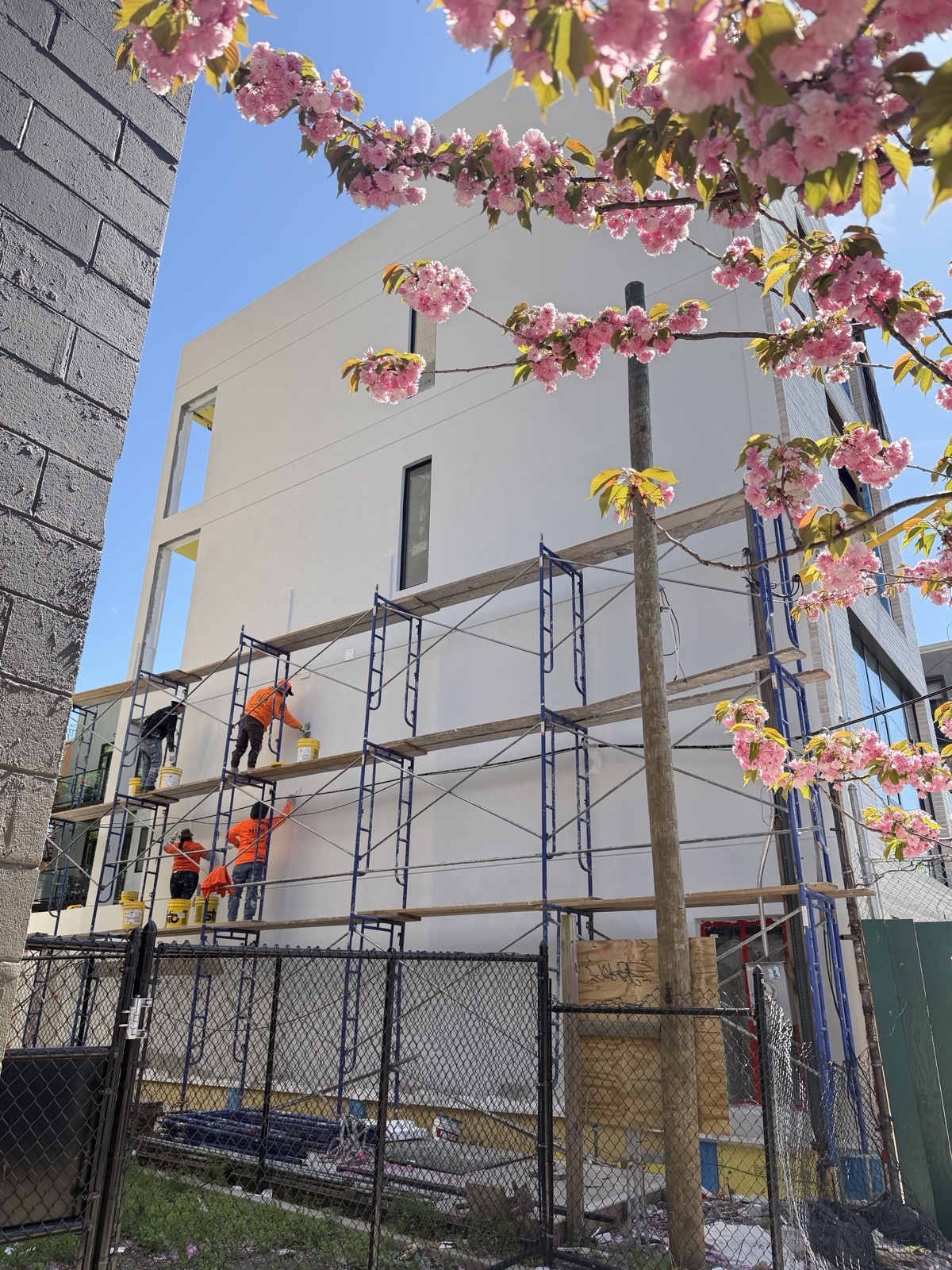
Why October Damp Becomes February Damage
This is the part that makes a slow problem into an urgent one, and it is simple physics.
Water expands by roughly nine percent when it freezes. A wall section that is saturated in October and never fully dries goes into the first hard freeze full of water. That water expands inside the pores of the material and inside every crack. It pushes the crack a little wider. It thaws, more water gets in, and it freezes again.
New York City gives you dozens of freeze thaw cycles between December and March. Each one is small. The accumulation is not. A hairline crack with a wet wall behind it in October is frequently an open crack with spalled edges by March, and the section that was merely damp is the section that has come loose.
The reason we push people to look at this now rather than in spring is not sales pressure. It is that the repair in October is sealing and patching, and the repair in April is removal and replacement of a much larger area.
What Is Genuinely Fine to Ignore
Plenty of it, and we would rather say so.
Morning dew that dries by lunchtime is fine. It will happen every clear night from now until spring and it means nothing. Slightly slower drying on the north elevation is fine, because that wall gets less sun and always will. A few fine hairline cracks that do not darken when the wall is damp are fine, because they are surface shrinkage and not a water path. Faint uniform greying across a shaded wall is usually surface algae, cosmetic, and a job for a gentle wash in spring rather than anything urgent.
What is not fine is a dark patch in the same place every afternoon, especially with white deposits, a hollow sound or a bulge next to it.
Give It a Week
If you are not sure which you have, you do not need a contractor to find out. Photograph the wall at eight in the morning and again at two in the afternoon, on three or four clear days over a week. Same spot, same framing.
Lay those photographs side by side and the answer is usually obvious. Either the wall dries out evenly every day, in which case you are watching dew and you can stop worrying, or the same patch is still there every afternoon, in which case it is worth a proper look before the freeze.
When it is the second one, we will come and sound the wall, check the sills, the coping and the drainage above it, and tell you what is actually feeding it. Call (516) 713-9199 or request a free written quote. Plenty of these visits end with us pointing at a gutter.
Frequently Asked Questions
Is it normal for stucco to be wet every morning?
Yes, in autumn it is completely normal. On a clear night the wall radiates heat to the sky, drops below the dew point and collects condensation exactly like a cold window. Every exterior material does it. The question is not whether the wall is wet at seven in the morning. It is whether the same patch is still wet at two in the afternoon.
How do I tell dew from a real water problem in my stucco?
Look at the same wall in the early afternoon on a clear day. A healthy wall dries evenly and returns to one uniform colour. A wall with a problem leaves islands, one patch visibly darker than the rest, in the same place day after day. That patch is no longer holding dew, it is holding water that came from somewhere else.
What does white powder on stucco mean?
It is efflorescence, salts carried out of the wall to the surface by water moving through the material. The powder itself is not damage, it is evidence. It tells you water is travelling through that section of wall and roughly where it is emerging. Efflorescence next to a patch that stays damp all afternoon is worth investigating before winter.
Why does a damp patch keep appearing under my window?
Usually the sill has no drip edge underneath it, or the sealant at the ends of the sill has failed. Water runs off the glass onto the sill and instead of dripping clear of the wall it tracks back underneath and into the assembly. It is one of the most common and most fixable sources of a recurring damp patch.
Can damp stucco survive a New York winter?
Often not without damage. Water expands about nine percent when it freezes, and New York gives you dozens of freeze thaw cycles between December and March. A saturated section goes into winter full of water that widens every crack a little more each cycle. A hairline crack with a wet wall behind it in October is frequently an open crack by March.
Should I wash the grey off my stucco now or wait?
Wait for spring. Faint uniform greying on a shaded wall is usually surface algae and it is cosmetic. A gentle wash in warm weather handles it, and the wall dries properly afterwards. Washing a wall in late autumn puts more water into it right before the freeze, which is the opposite of what you want.
Will you come and look at a damp patch for free?
Yes. We sound the wall, check the sills, the coping and everything draining above it, and tell you plainly whether it is dew, a gutter problem or water inside the assembly. A good number of these visits end with us pointing at a downspout, which is a far cheaper fix than anything involving stucco.