New York stucco fails at the base first because four things hit the same band: wicking from grade, splash back, snow piled against the wall for weeks, and rock salt. Freezing water expands about 9 percent inside the material. MNM Construction Stucco checks it free at (516) 713-9199.
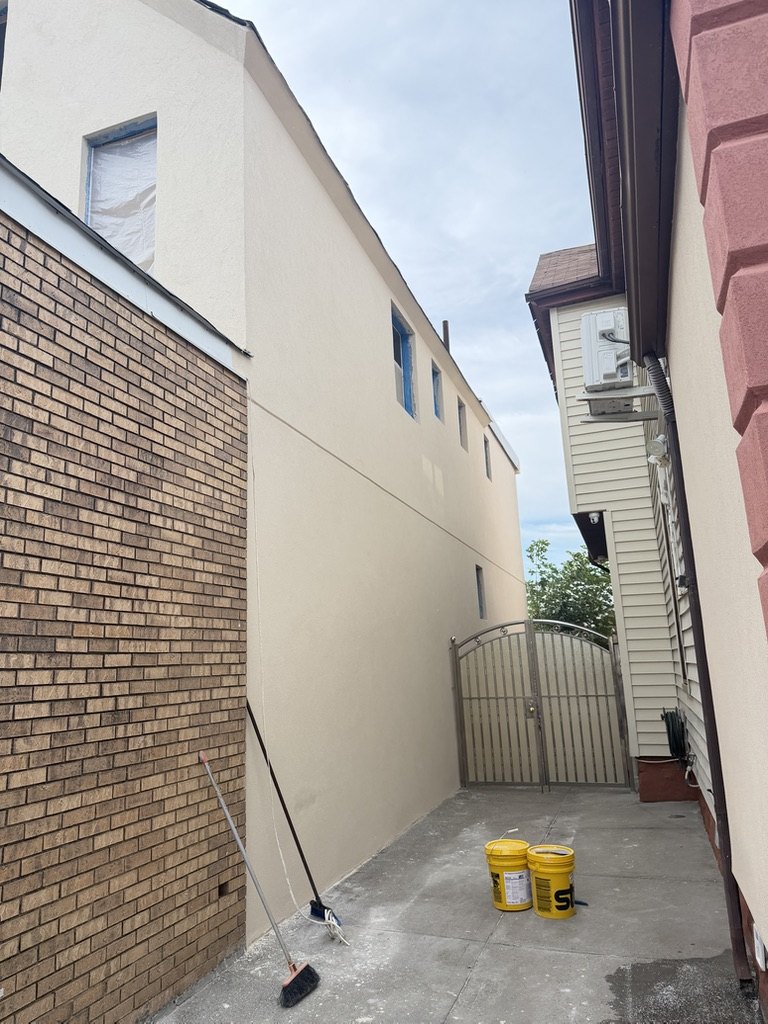
Look at the Bottom Three Feet
Next time you walk past your own building, ignore the middle of the wall and look at the bottom three feet. That band is where New York stucco fails first, and it fails there for four separate reasons that all stack on top of each other in winter.
Most people watch for cracks at the window corners, because that is where cracks are most visible. Meanwhile the real damage is happening at ankle height where nobody looks.
Reason One: The Wall Is Drinking From the Ground
Cement based stucco is porous. It is designed to be. If stucco runs straight down into soil, a planting bed, or a concrete slab with no clearance, it behaves like the corner of a paper towel sitting in a puddle. Ground moisture wicks upward through the material, sometimes a foot or more.
The standard detail is to stop the system clear of grade, usually a few inches above soil and a couple of inches above paving, with a weep screed at the bottom edge that lets any water inside the wall drain out. On a lot of the New York work we open up, that detail is simply missing. The stucco was run right down to the ground because it looked neater.
You can often see the result without touching anything. A horizontal dark band along the base that is still dark in the afternoon when the rest of the wall has dried is a wall that is wicking.
Reason Two: Splash Back
Rain hitting a hard surface next to the wall bounces. On a concrete path or an alley slab, water comes off the ground and hits the bottom of the wall again and again through every storm, and it carries grit with it. That band takes several times the water exposure the rest of the elevation gets.
In a narrow Brooklyn alley it is worse, because the water has nowhere to go and the wall never gets enough sun to dry properly. Those alley walls are the ones we get called to most often.
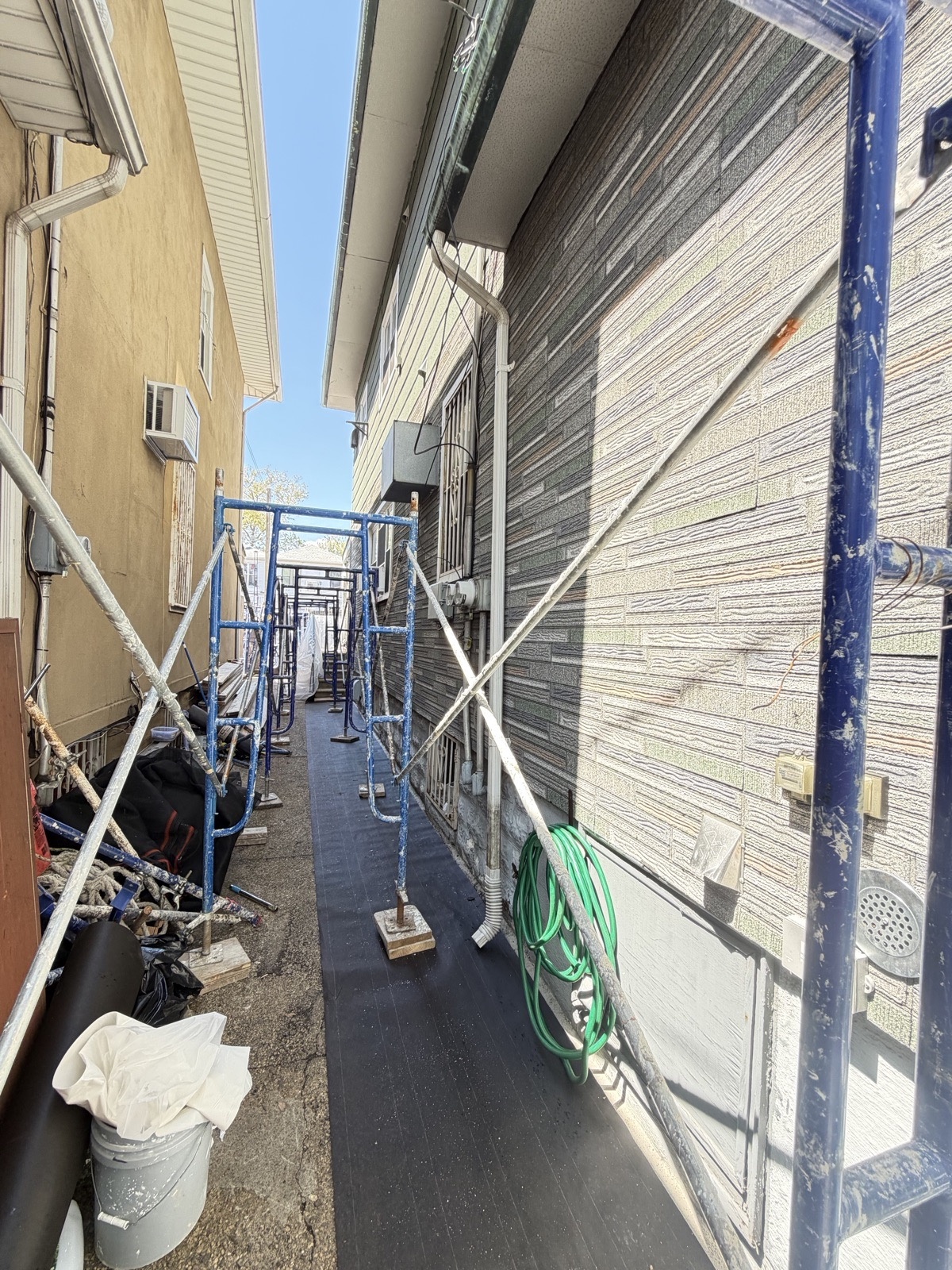
Reason Three: Snow Sits Against It for Weeks
This is the one that turns a slow problem into a fast one, and it is specific to winter.
Snow cleared off a path gets piled against the building. It is the obvious place to put it. That pile then sits against the bottom of the wall for days or weeks, melting slowly during the day and refreezing at night, keeping that band of stucco saturated the entire time.
Saturated stucco plus a freeze is the whole failure mechanism. Water expands roughly nine percent when it freezes, and it does that inside the pores of the material. One cycle does nothing you can see. New York gives you dozens between December and March. The surface starts to crumble and flake, which is spalling, and once the face is open the water gets in faster and the next winter does more damage than the last.
Reason Four: Salt
Rock salt is the accelerant. It comes off the sidewalk in splash, it comes off boots, and it comes in the snow pile you just shovelled against the wall. Salt crystallises inside the pores of the stucco as it dries and the crystals expand, which does mechanical damage in exactly the same way the ice does, except it keeps working on mild days too.
Salt also brings salts out of the wall to the surface, which is the white powdery deposit called efflorescence. We wrote about what rock salt does to stucco separately, but the short version is that the bottom of the wall takes nearly all of it.
What You Can Do This Month, Free
Three things, none of which need a contractor.
Clear the base of the wall. Pull soil, mulch and leaves back so the stucco is not in contact with wet material. If you can see where the system is supposed to stop above grade, get the ground back below it.
Decide now where snow goes. Pick a spot that is not against the building and tell whoever clears the path. This single habit prevents more stucco damage than any product you can buy.
Check that water leaving the roof lands away from the wall. A downspout discharging at the base of a stucco wall is the fastest way to destroy it, and it is a cheap fix. We covered the full picture in what clogged gutters do to stucco.

When It Is Past the Free Fixes
Some conditions will not wait, and the test is whether the material itself has let go rather than just looking stained.
Tap along the base with a knuckle. A sound wall gives a hard flat knock. A section that drums has released from what is behind it, and a debonded band at the bottom of a wall going into winter will come off. Sight along the wall from one end and look for a bulge, which is invisible face on and obvious from an angle. Crumbling or flaking that leaves grit on the ground means the surface is already spalling.
Any of those three next to a damp band is worth getting looked at before the first hard freeze rather than after, because the repair in October is a patch and the repair in April is a section.
The Repair Is Not Just Patching the Damage
This matters, because a patch that ignores the cause fails the same way within two winters.
A proper base repair cuts the system back to sound material, re establishes clearance above grade so the wall is no longer touching wet ground, and gives the water inside a way out. Then the patch goes on and gets colour and texture matched into the surrounding wall.
If somebody quotes you a price to skim over a crumbling base without mentioning grade, drainage or what is sending water there, that is the version you pay for twice. Call (516) 713-9199 or request a free written quote and we will tell you which of the four causes is yours.
Frequently Asked Questions
Why does stucco damage always start at the bottom of the wall?
Four things stack there. The wall wicks moisture up from the ground if the stucco runs into soil or paving with no clearance, rain splashes back off hard surfaces onto that band repeatedly, snow gets piled against it and keeps it saturated for weeks, and rock salt crystallises inside the pores. The middle of the wall gets none of that.
What is a weep screed and why does it matter?
It is the metal edge at the bottom of a stucco system that stops the material clear of grade and lets water that gets inside the wall drain back out. Without it the stucco sits in contact with wet ground and wicks moisture upward, sometimes a foot or more. It is the single most common missing detail we find on failed New York stucco.
Does piling snow against the house really damage stucco?
Yes, and it is one of the most avoidable causes we see. A snow pile against the wall melts by day and refreezes at night, keeping that band saturated for weeks. Water expands about nine percent when it freezes, inside the pores of the material, and New York gives dozens of freeze thaw cycles between December and March. Choose a spot away from the building before the first snowfall.
How do I tell if the bottom of my wall needs repair now or can wait?
Tap along the base with a knuckle. A sound wall knocks hard and flat, a debonded section drums. Sight along the wall from one end to spot a bulge, which is invisible face on. Look for crumbling that leaves grit on the ground. Any of those next to a damp band should be addressed before the first hard freeze, not after.
Can I just patch the crumbling part?
Not if you want it to last. A patch over a base that is still wicking from the ground or still taking downspout water fails the same way within about two winters. A proper repair cuts back to sound material, re establishes clearance above grade, gives trapped water a way out, and then colour and texture matches the patch into the wall.
Is salt damage different from freeze damage?
The mechanism is similar but salt keeps working on mild days. Salt crystallises inside the pores as the wall dries and the crystals expand, doing mechanical damage the same way ice does. It also draws salts out to the surface as the white powder called efflorescence. Salt reaches the wall through sidewalk splash, boots and the snow you pile against it.
Will you look at the base of my wall for free?
Yes. We sound the bottom of the wall, check grade clearance and the weep screed, look at where every downspout discharges, and tell you which of the four causes is actually yours. A good number of these visits end with us saying move the snow pile and extend a downspout, which costs almost nothing.