If a stucco contractor stops showing up, protect the open wall first, then document and complain. Exposed lath and paper start failing within weeks once it gets cold and wet. MNM Construction Stucco has taken over unfinished walls across NYC since 2009 and gives a free written assessment at (516) 713-9199.
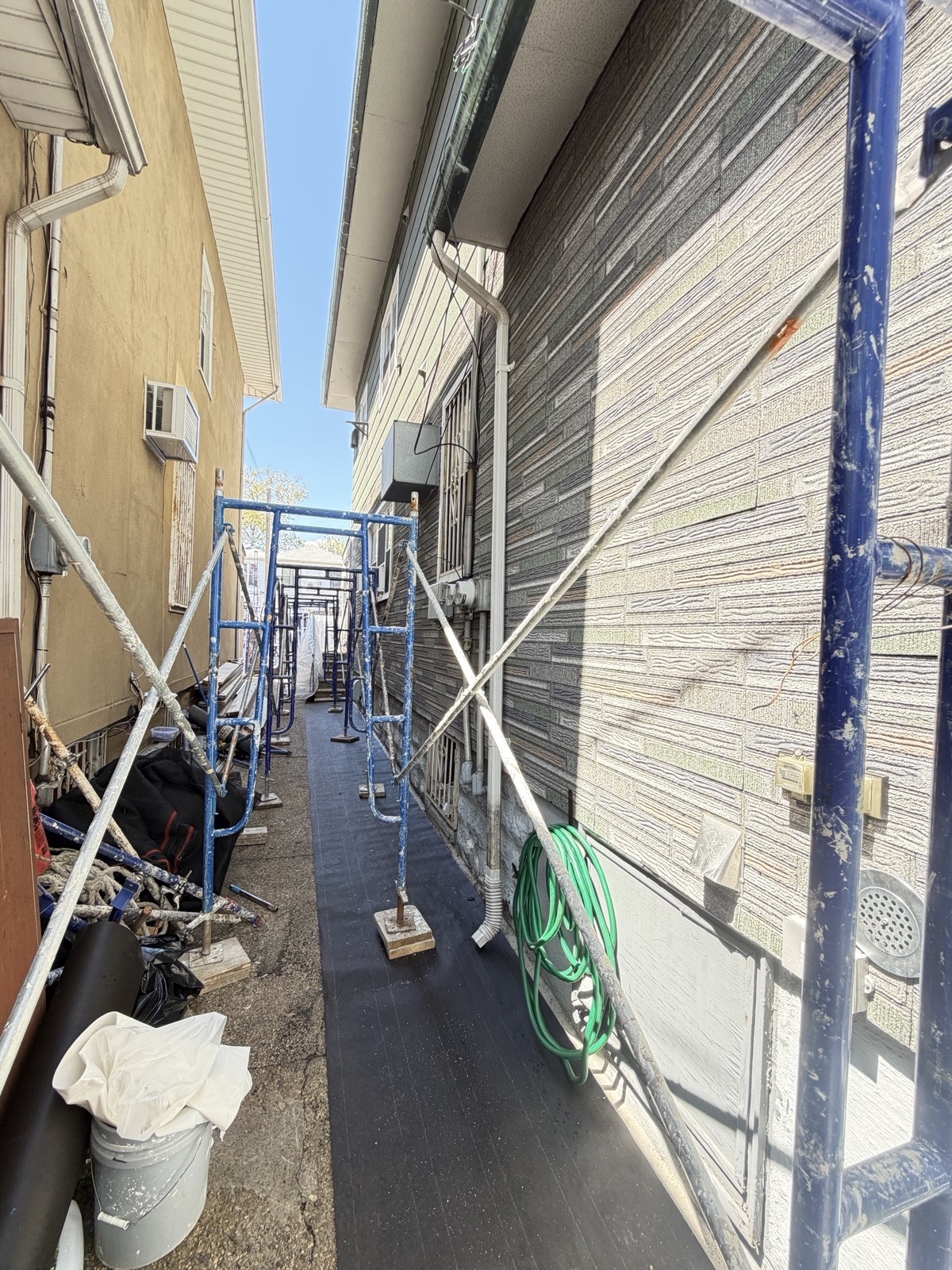
First, Figure Out What Stage the Wall Is At
Walk around the house and identify what is actually on the wall right now, because the urgency depends on it. A traditional stucco job goes in layers: a water resistive barrier, which is building paper or housewrap; metal lath fastened over it; a scratch coat, which is the first rough coat with horizontal grooves; a brown coat that levels it; and a finish coat.
If you can see paper or wrap, that is the most urgent case. Those products are made to be covered, not to sit in sun and wind for months, and once torn they let water straight into the wall. If you can see bare metal lath, it will start to rust. If the scratch coat or brown coat is on, the wall is in much better shape and can usually wait a few weeks while you sort things out, but the open edges and the tops of walls still take water.
Protect It This Week
Close up anything open. Tape torn paper and wrap with a compatible tape, cover exposed areas with heavy plastic sheeting fastened at the top and lapped so water runs over it rather than behind it, and make sure the top edge of any unfinished section is covered, because that is where rain gets in.
Do not try to finish the stucco yourself, and do not let a handyman put a coat over the work without knowing what is under it. If the contractor did something wrong with the lath or the barrier, a new coat on top hides it and you pay for it twice.
If it is already cold, keep in mind that cement stucco should not be applied when temperatures will drop below about 40 degrees within a day or two. Late in the season the realistic goal may be to protect properly now and finish in spring.
Document Everything Before Anything Changes
Photograph every elevation of the house, close up and from a distance, with dates. Keep the contract, every text and email, every receipt and every record of payment. Write down the dates the crew was on site and the last time you heard from them.
Send the contractor a written notice, by email and by certified mail, saying the work has stopped, what is unfinished, and giving a reasonable date to return. Keep it factual. If they come back, good. If they do not, that letter is the record that you gave them the chance.
Where to Complain in NYC
In New York City, home improvement contractors working on residential property must be licensed by the Department of Consumer and Worker Protection, DCWP. Look the contractor up on the city's license search. If they are licensed, you can file a complaint with DCWP, which can mediate, and the city also runs a Home Improvement Trust Fund that may help homeowners who cannot recover money from a licensed contractor.
If the contractor was not licensed, you still file, and you should also speak with a lawyer about small claims court for the amount you paid for work that was not done. On Long Island, Nassau and Suffolk each license home improvement contractors through their own consumer affairs offices, and the same steps apply there.
Do not pay any remaining balance while this is open, even if the contractor reappears asking for money to buy materials.
How a New Contractor Takes Over
A responsible takeover starts with an inspection of what is already on the wall, not a price for finishing it. We check that the barrier is lapped correctly and not torn, that the lath is fastened at the right spacing and is not rusted, that the weep screed is at the bottom of the wall, and that any coats already applied are sound and bonded. Tapping tells you a lot, and sometimes a small test opening is needed.
Then you get a written scope that says plainly what can stay, what has to be redone, and why. Often most of the work can be kept. Sometimes the first contractor's shortcut, a missing barrier layer or lath that was never properly fastened, means part of it has to come off. You should see that in photos, not just hear it.
Expect the price to be different from finishing a job you started from scratch, because the crew has to work from someone else's layers. It is still almost always cheaper than letting the wall sit open through a NYC winter.
Avoiding It Next Time
Check the license before signing, pay in stages tied to finished stages of work rather than large amounts up front, get the scope in writing with the system and the number of coats named, and keep an eye out for a contractor who is juggling too many jobs at once. Our guide to choosing a stucco contractor in NYC goes through the checks in detail.
If you are already in this situation, MNM Construction Stucco will look at the wall, tell you honestly what state it is in and what it needs before winter, and put it in writing at no charge. We work across Brooklyn, Queens, Manhattan, the Bronx, Nassau and Suffolk. Call (516) 713-9199 or (917) 570-7311.