A long straight crack in a Brooklyn stucco wall is almost always a missing control joint, not a failing wall. The lath standard allows one stucco panel per 144 square feet. Walls built without those joints crack where the joint should have been. MNM Construction Stucco cuts and seals them. Call (516) 713-9199.
Two Kinds of Crack, and They Are Not Related
Before anything else, work out which one you have. People lump all stucco cracks together and they should not.
Shrinkage cracking is fine, random and spread out. It looks like a dry riverbed or a spider web. It happens as the material cures and loses water, mostly in the first year, and it is usually under a hairline in width. It is cosmetic. A skim coat or an elastomeric finish buries it and it stays buried.
Movement cracking is one crack, not a network. It is straight. It runs the full height of a wall, or straight across it at one level, or it goes diagonally up from the corner of a window. It is wider than a hairline, it is often open enough to see into, and the giveaway is that it comes back in exactly the same place every time somebody patches it.
The second one is the one worth reading about. A patch will not hold it, because the patch is not the problem.
What a Control Joint Actually Is
Stucco is a rigid material stuck to a building that is not rigid. The building moves. Wood frame shrinks as it dries out, floors deflect under load, and the whole facade expands and contracts with temperature. A dark wall in Brooklyn can swing seventy or eighty degrees between a February night and a July afternoon.
A control joint is a deliberate break in the stucco. The material stops, there is a gap, and the gap is either filled with a joint profile or with backer rod and a flexible sealant that stretches. When the building moves, the joint opens and closes a hairline amount and the stucco panels either side stay intact.
Leave the joint out and the wall still moves. It just chooses its own line, and it chooses the weakest one. That is the straight crack you are looking at.
Where the Joints Are Supposed to Go
This is not opinion. ASTM C1063, the standard that governs lath for portland cement plaster, is specific.
- A single stucco panel on a wall may not exceed 144 square feet
- The length of a panel may not be more than two and a half times its width
- No joint spacing may exceed 18 feet in either direction
- A joint goes in wherever the framing or the substrate changes
- A joint goes in at every floor line on wood frame construction
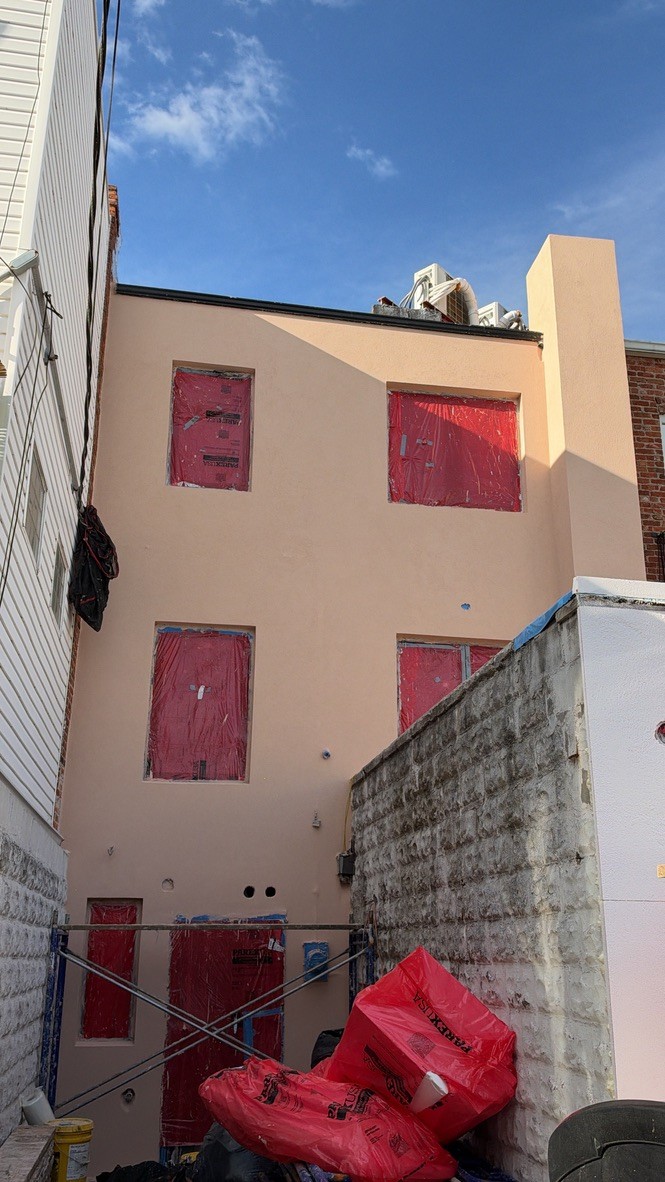
Put a tape measure on a typical Brooklyn row house rear elevation. Twenty feet wide, three floors, call it thirty feet tall. That is six hundred square feet of wall. The standard wants it broken into at least five panels, which in practice means a horizontal joint at each floor line and a vertical joint splitting the width.
Count the joints on your wall. On a lot of the walls we are called to look at, the answer is zero.
Why the Crack Shows Up Where It Does
Movement cracks are predictable enough that we can usually point at the likely line before we walk round the building.
Straight across at one level. That is a floor line. The joists shrank or deflected, the framing dropped a fraction, and the stucco parted along the only line that was already under stress.
Diagonal out of a window or door corner, at roughly 45 degrees. The corner of an opening concentrates stress. The fix is supposed to be a diagonal strip of lath laid across each corner before the base coat. When that is skipped, the corner cracks on the first serious temperature swing and it keeps cracking after every patch.
Vertical, floor to floor, in the middle of a wide wall. The panel was too big. There was nowhere else for the movement to go.
On the line where one material ends and another starts. Block at the bottom, frame above it. Old wall meeting a new extension. Two substrates that move at different rates with rigid stucco bridging them is a crack waiting to happen.
The Test With a Credit Card
You can tell most of what matters from the ground in five minutes.
Take a credit card to the crack. If the edge will not go in, it is hairline and in most cases it is cosmetic shrinkage. Note where it is and leave it until spring.
If the edge slides in, the crack is open. An open crack is a water path, and from here until March it will be freezing and thawing with water sitting in it. That one gets dealt with before winter.
Then check two more things. Run a finger across the crack. If one side sits proud of the other, the wall has moved out of plane and that is a different conversation, not a sealant job. And knock either side of it with a knuckle. Sound stucco knocks flat and hard. A drumming sound means the material has let go of what is behind it, and that section has to come off rather than be filled. There is more on that in our note on bulges and soft spots.
How We Fix It
You cannot talk a wall out of moving. The repair gives the movement a place to go.
We saw cut a clean joint along the line the wall has already chosen, because that line is telling us where the stress is. The cut goes back to the lath. We clean it out, set a joint profile or a backer rod in it, and seal it with a flexible sealant rated for facade movement rather than a rigid patching compound. Then the finish goes over it so it reads as a deliberate line in the wall and not a scar.
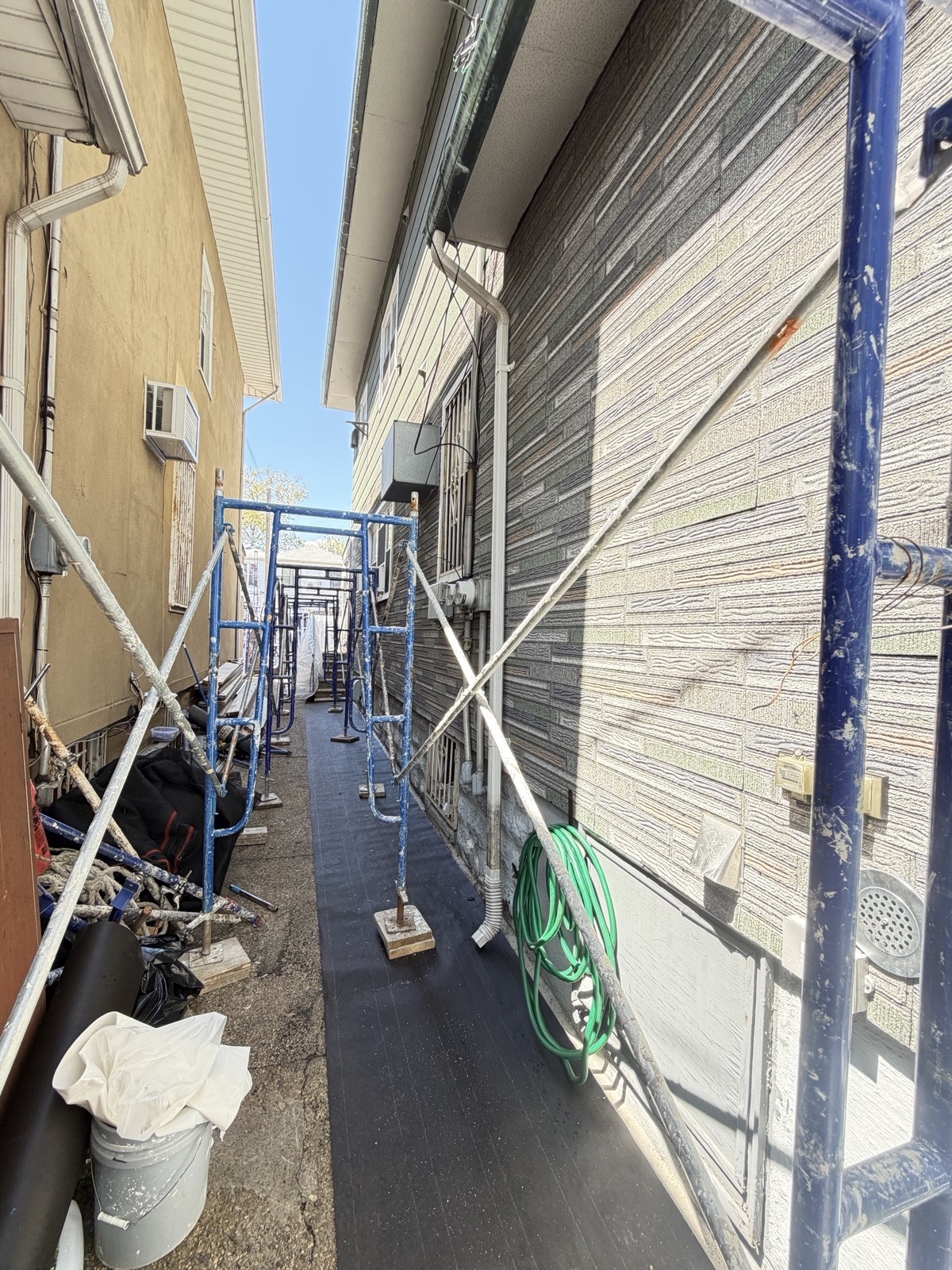
If the elevation has no joints at all, we cut the rest of them at the same time rather than waiting for the wall to show us the next one. It is the same scaffold, the same crew and the same day.
Where the crack has been open for a while and water has been in it, more comes off. Wet lath rusts, and rusting lath pushes the stucco off the wall. If the knock test drums, that area gets removed back to sound material and rebuilt. We would rather find that in October than open it up in April having spent the winter arguing about a sealant.
What It Looks Like When It Is Done Right
A wall with proper joints does not look damaged. It looks designed. The joints line up with the floor levels and the window heads, they are straight, and they read as part of the elevation rather than as a repair.
That is the difference between a wall that was detailed and a wall that was just covered. The covered one looks perfect for two or three years and then starts cracking in straight lines. The detailed one still looks the same in year fifteen.
Straight Crack on Your Wall?
We will come out, measure the elevation, count the joints that should be there, tell you whether what you have is cosmetic or structural, and give you the price in writing. The visit is free.
Frequently Asked Questions
Why does my stucco crack in a perfectly straight line?
A straight crack that runs the full height of a wall or across it at one level is a movement crack, not a shrinkage crack. The building moved and the stucco had no joint to move at, so it made its own. Random spidery cracking is shrinkage. A single straight line is almost always a missing or failed control joint.
How far apart should control joints be in stucco?
ASTM C1063, the standard for lath, limits a stucco panel to 144 square feet on a wall, with no side more than two and a half times the other and no joint spacing over 18 feet. On a Brooklyn row house rear elevation that normally works out to a joint at every floor line and at least one vertical joint on a wide wall.
Can you add control joints to stucco that is already cracked?
Yes. We saw cut a clean joint on the line the wall has already chosen, clean it out to the lath, install a joint profile or backer rod, seal it with a flexible sealant and finish over it so it reads as a deliberate line. The crack stops reappearing because the movement now has somewhere to go.
Is a straight crack in stucco a structural problem?
Usually not. Most of the ones we open up are a wood frame that shrank, a floor that deflected or two different substrates meeting with no joint between them. It becomes a structural question when the crack is diagonal from a window corner, is wider at one end, or has one side sitting proud of the other. Those get looked at properly before anyone patches.
Why do cracks always start at the corner of a window?
Because the corner of an opening is where stress concentrates. The standard answer is a diagonal strip of lath set at 45 degrees at each corner before the base coat goes on. If that reinforcement was skipped, the first real temperature swing puts a crack there and it comes back every time it is patched.
Should I fix a straight stucco crack before winter?
If it is open enough to take a credit card edge, yes. An open crack takes water in, and New York runs dozens of freeze thaw cycles between December and March. Each one widens it slightly. A joint cut and sealed in October is a day of work. The same wall in April is usually a patch of removal and replacement.
What does it cost to cut control joints into an existing wall?
It depends on how much wall and how much access. On a two story Brooklyn rear elevation reachable from a ladder or light scaffold, cutting, sealing and finishing the joints is a one to two day job. We quote it in writing after seeing the wall, and the estimate is free. Call (516) 713-9199.