A stucco chimney cracks before the rest of the house because it is exposed on four sides, stands above everything sheltering it, and gets heated from the inside the day you light the first fire. MNM Construction Stucco inspects chimneys free across NYC and Long Island at (516) 713-9199.
It Is the Most Exposed Thing on the Building
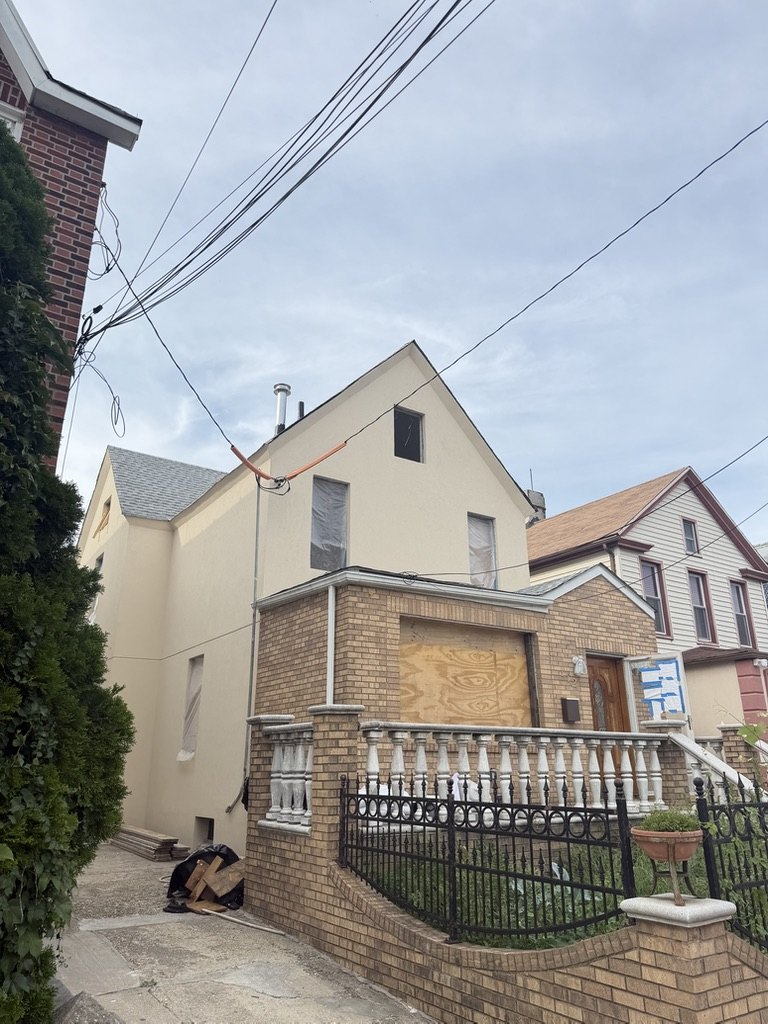
Think about what a chimney actually is. Every other wall on the house has at least one side facing conditioned space and usually something next to it breaking the wind. A chimney has none of that. It takes weather on four faces, it stands above the roof where nothing shelters it, and it gets the full wind off the harbor on a Brooklyn block where the houses are otherwise shoulder to shoulder.
Then add the thing no other part of the building deals with. The flue inside it goes from outdoor temperature to several hundred degrees within an hour of lighting a fire, and back down overnight. That cycle runs every day from November to March.
Heat makes material expand. Cold makes it contract. A rigid cement based skin over something that does that daily is going to crack, and it cracks on the chimney years before it cracks anywhere else.
The Leak Is Almost Never Where You Think
When somebody calls us about a chimney, the complaint is usually a stain on a bedroom ceiling. The visible cracks on the chimney faces are rarely the cause.
The cause is nearly always the base, where the chimney passes through the roof. That junction has to be sealed with metal flashing that is layered into the roof covering, so that water running down the chimney gets turned out onto the roof and away. Done right it lasts decades.
What we find instead, over and over on older New York work, is that junction sealed with roofing tar or a bead of caulk. It works for a few seasons. Then the tar goes brittle, cracks, and the water that was running down four faces of the chimney goes straight into the house instead of onto the roof. It travels along a rafter and shows up as a stain in a room that is nowhere near the chimney, which is why people never connect the two.
The Crown Is the Part Nobody Has Ever Seen
The crown is the sloped cap on top. Its only job is to shed water off the top of the chimney and throw it clear of the faces, which it does by sloping away from the flue and overhanging the sides enough to drip free.
A good number of the crowns we find are flat, or cracked across, or poured flush with no overhang at all. A flat crown holds a puddle after every storm. A cracked crown feeds that water directly into the top of the masonry, which then soaks down through the chimney from the inside. The stucco on the faces is not failing because of the rain hitting it, it is failing because the chimney is wet from the top down.
This is the single most overlooked detail in the whole thing, for the obvious reason that you cannot see the top of a chimney from the ground.
What to Check This Week, From the Ground
You do not need to go on the roof for any of this. Stand across the street and use your phone camera zoomed all the way in, or a pair of binoculars.
Vertical cracks down the faces. A hairline is normal on an older chimney. A crack wide enough to see from the street is letting water in.
A dark face. Compare the four sides. The one facing the weather staying noticeably darker a day after rain is a face that is holding water rather than shedding it.
The crown. If you can get an angle on it, look for a flat top or a visible crack running across it.
The base. Look at the line where the chimney meets the roof. Tar that has gone gray and crazed, or a visible gap, is your leak.
Inside. Walk into the room nearest the chimney and look at the ceiling and the top of the wall. A stain that was not there in the spring is the answer to the whole question.
Cracked Stucco Is a Water Problem. What Is Behind It Might Not Be
Worth being straight about this. The stucco on a chimney is a weather skin. A crack in it means water is getting into the chimney, which is a building problem and our work.
But a chimney that has been taking water for several winters can have deteriorated masonry and a damaged flue liner behind that skin, and that crosses into combustion safety, which is not our trade. If you see crumbling material, a chimney that looks out of plumb, or a ceiling stain next to it, get a stucco contractor and a chimney sweep both. We will tell you honestly which half of the problem is ours.
Why This Is an October Job and Not a February One
Two hard reasons.
Stucco and sealants need temperature to cure. Once New York nights settle below roughly 40 degrees the material will not set properly and the honest answer becomes wait for spring. That window is closing now, not in December. We laid out the full timing in whether stucco repair can wait until spring.
And a chimney that is open in November spends the entire freeze thaw season saturated. Water expands about nine percent as it turns to ice, inside the pores of the material, and New York delivers dozens of those cycles between December and March. Nothing shows after one. After a season the crack you could have sealed is a face that has released and has to be cut out and rebuilt.
What the Repair Actually Involves
Cut the cracks back to sound material rather than filling the line on the surface. Rebuild or re slope the crown if it is flat or cracked, with an overhang that throws water clear. Replace tarred flashing at the base with properly layered metal. Then refinish the faces and match texture and color into whatever is next to it, which on a chimney means working at height off a roof and is the part that makes it a contractor job rather than a Saturday.
If somebody quotes you a number to skim the faces without mentioning the crown or the base flashing, that is the repair you pay for twice. Call (516) 713-9199 or request a free written quote.
Free Chimney and Facade Inspection
We look at the crown, the four faces and the junction at the roof, and give you a written estimate with nothing owed. NYC and Long Island.
Frequently Asked Questions
Why does a stucco chimney crack more than the rest of the house?
Because it is the only part of the building exposed on four sides at once, it sticks up above everything that would shelter it, and it is the only part heated from the inside. The wall of your house has conditioned space behind it. A chimney has a flue that goes from outdoor temperature to several hundred degrees within an hour of lighting a fire, then back down overnight. That cycle runs every day of heating season.
Where do stucco chimney leaks actually start?
Almost always at the base, where the chimney passes through the roof. That junction is sealed with metal flashing that has to be layered into the roof covering, and a lot of New York chimneys have it sealed with tar or caulk instead. Tar gets brittle and lets go after a few seasons. Water then runs down the outside of the flue into the house and shows up as a ceiling stain nowhere near the chimney.
What is a chimney crown and why does it matter?
The crown is the sloped cap on top of the chimney that sheds water away from the flue and the masonry below. It should overhang the sides so water drips clear rather than running down the face. A cracked or flat crown feeds water directly into the top of the chimney, and because it is the one surface nobody ever sees from the ground it fails quietly for years.
Can I check my stucco chimney without getting on the roof?
Most of it, yes. Stand back across the street with binoculars or use your phone camera zoomed in. Look for vertical cracks running down the faces, dark staining on the side that takes the weather, a crown that looks cracked or flat rather than sloped, and daylight or a gap where the chimney meets the roof. Also check the ceiling inside the room nearest the chimney for a stain that was not there last spring.
Is a cracked stucco chimney dangerous or just a leak?
The stucco itself is a weather skin, so a crack in it is a water problem rather than a safety problem. But a chimney that has been taking water for years can have damaged masonry and a damaged flue liner behind that skin, and that is a combustion safety issue. If you see crumbling material, a leaning chimney or a stain on the ceiling near it, get both a stucco contractor and a chimney sweep to look before you light anything.
Why fix it in October rather than waiting?
Two reasons. Stucco and sealants need temperature to cure properly, and once New York nights settle below about 40 degrees the window closes until spring. And a chimney that is taking water in November goes through the whole freeze thaw season saturated. Water expands about nine percent when it freezes, inside the material, dozens of times between December and March. That is how a crack becomes a rebuild.
Do you repair stucco chimneys, and is the estimate free?
Yes. MNM Construction Stucco repairs and refinishes stucco chimneys across NYC and Long Island, including the crown, the faces and the junction at the roof. The inspection and written estimate are free. Call (516) 713-9199.