A crack where stucco meets the roof edge matters more than a crack anywhere else on the wall, because water enters a building from the top. In New York that joint takes the whole roof slope during a storm. MNM Construction Stucco inspects it free at (516) 713-9199.
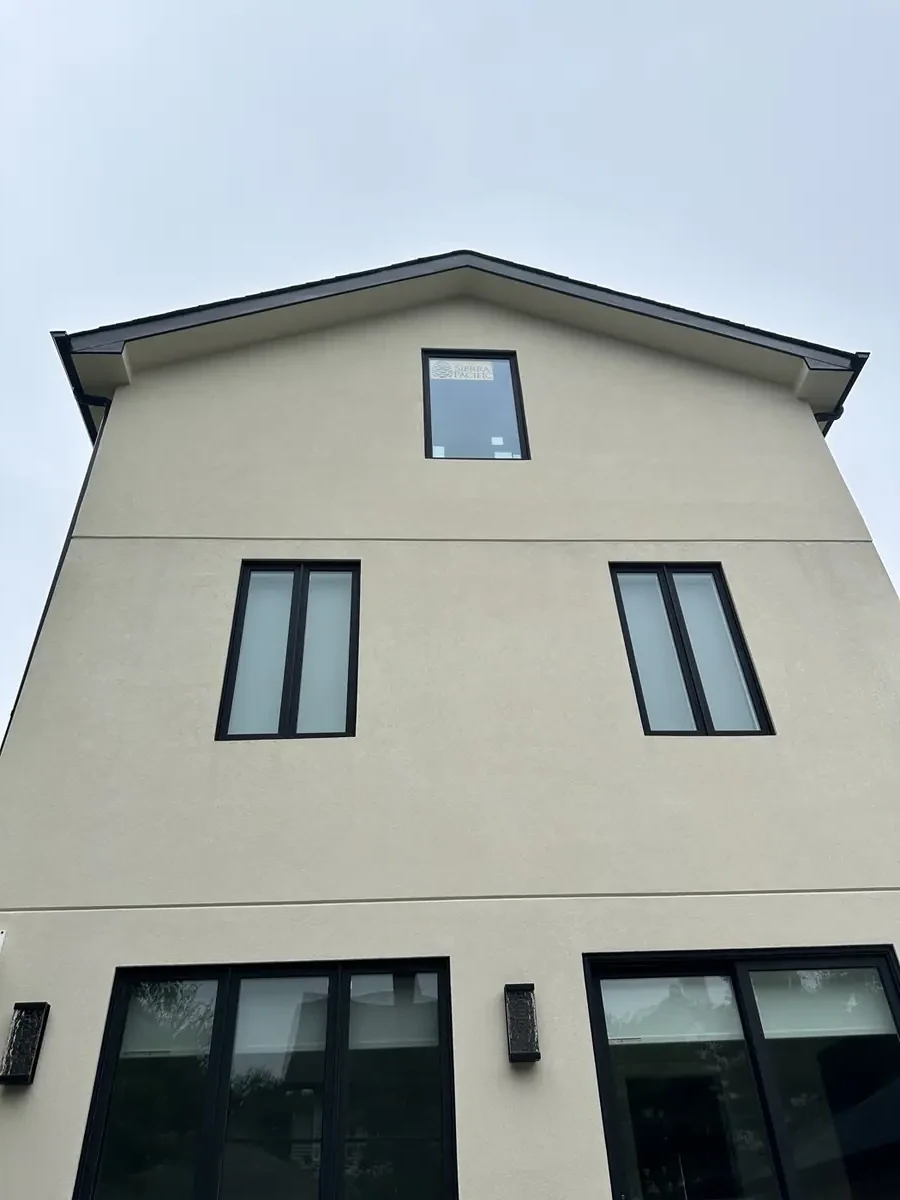
Two Materials, Two Different Rates of Movement
Stucco is a rigid cement based material. The thing it meets at the top of the wall is not. It is wood fascia, or a metal drip edge, or the turned up edge of a roofing membrane, and every one of those expands and contracts on a different schedule than the wall does.
In July a dark roof surface can sit 40 to 60 degrees hotter than the stucco a foot below it. The roof edge moves, the stucco does not want to, and the joint between them takes the difference. Do that every day for a few years and the joint opens.
That is normal. It is why the detail is supposed to be sealed with a flexible material that stretches instead of splitting. The problem is how often we find that joint filled with something rigid, or filled with nothing at all.
Why That Particular Crack Is Worse Than the Others
A hairline in the middle of an elevation sheds most of the rain that hits it. Water runs down the face and past it. Annoying, worth watching, rarely urgent.
A crack at the roof junction is a different animal. It sits directly under everything the roof is shedding. In a heavy storm the water passing that joint is not the rain falling on that one square foot, it is the drainage from an entire roof slope funnelled along the edge. The volume is not comparable.
And once water is inside the wall at the top, gravity does the rest. It travels down behind the stucco, which is why the stain shows up on the ceiling or at a window head two floors below and nobody connects it to the roofline.
The Gutter Is Usually the Real Culprit
This is the part that makes it a late October problem rather than a someday problem.
A gutter that is packed with leaves does not just stop draining. It starts overflowing, and gutters overflow over the back edge first, which is the edge against the house. That water does not fall clear of the building. It pours down the face of the wall at the exact junction where the stucco is already weakest, and it does it in every storm for the whole leaf season.
We have gone out to a wall that looked like it needed a full section rebuilt and found the whole thing came from one blocked gutter corner over three autumns. The full picture is in what clogged gutters do to stucco, but the roofline joint is where it starts.

How to Tell a Surface Crack From a Live One
You do not need a ladder for the first two checks.
Look the day after rain. A cosmetic hairline dries at the same rate as the wall around it. A crack that is passing water leaves a damp tail running down from it, or a patch that is still dark when the rest of the elevation has gone pale. That tail is the tell.
Tap the wall below it. Use a knuckle and work across. A sound wall gives a hard flat knock. A section that drums has released from what is behind it, which means water has already been in there long enough to break the bond. We covered what that sound means in bulging stucco and soft spots.
Stand at the end of the wall and sight along it. A bulge is invisible face on and obvious from an angle.
What Happens If You Wait for Spring
The mechanism is simple and it only runs in one direction.
Water gets in through the joint. The wall behind the stucco stays wet because it has no sun on it and no way to dry. Then the temperature drops below freezing overnight, and water expands roughly nine percent as it turns to ice, inside the material. One cycle does nothing visible. New York hands you dozens of them between December and March.
That is the difference between an October repair and an April repair. In October it is a joint that needs cutting out and resealing properly. In April the same spot is a section that has debonded and has to be cut back to sound material and rebuilt. We get into the real numbers in whether stucco repair can wait until spring.
Can You Seal It Yourself?
Sometimes, and there are two ways it goes wrong.
The first is the product. A joint between two materials that move needs a flexible elastomeric sealant. Standard painter's caulk cures rigid and splits along the same line by February, which means you spent a Saturday on it and bought nothing.
The second is worse. Sealing the face of a joint that is already letting water through traps whatever is behind it. If the wall below the crack drums when you tap it, do not seal it. You will be closing the only route that water has to get back out, and it will come off the wall faster, not slower.
What a Proper Roofline Repair Involves
Cut the failed material out of the joint rather than smearing over it. Check what is behind it, because the reason we open these up is to find out whether the wall is wet. Re establish a flexible seal that is bonded to clean edges on both sides. Then, and this is the part people skip, fix what is sending the water there, which is usually a gutter, a downspout, or a missing drip edge.
A sealed joint under an overflowing gutter is a repair with a date on it.
Get the Top of Your Wall Looked At Before the Freeze
We check the roof junction, sound the wall below it, and look at where every gutter and downspout actually discharges. No charge, anywhere in NYC or Long Island.
Frequently Asked Questions
Why does stucco crack where it meets the roof?
Because two different materials meet there and they move at different rates. Stucco is rigid and cement based, the roof edge is wood trim, metal drip edge or a roofing membrane, and all of them expand and contract on their own schedule. A dark roof surface can run 40 to 60 degrees hotter than the stucco below it on a summer afternoon. That joint has to be sealed with something flexible, and if it was filled with rigid material it opens.
Is a crack at the top of a stucco wall serious?
It is the worst place on the wall to have one. Water gets into a wall from the top. A hairline crack in the middle of an elevation sheds most of what hits it, but a crack at the roof junction sits directly under everything the roof sends down, and in a storm that is the water from the whole roof slope, not just the rain hitting that one spot.
My gutter overflows onto that corner. Does it matter?
It is the single most common cause we find. A gutter packed with October leaves stops carrying water and starts pouring it over the back edge, which is the side against the house. That water runs straight down the face of the stucco at the exact junction where it is weakest, every storm, for the whole leaf season.
Can I just caulk it myself?
You can, and on a clean narrow joint a good elastomeric sealant will buy you a season. Two things go wrong. People use painter's caulk, which is rigid when it cures and splits again by February. And people seal over a joint that is already letting water through, which traps what is behind it. If the stucco next to the crack sounds hollow when you tap it, sealing the surface makes it worse.
What happens if I leave it until spring?
Water that gets in through that joint soaks the wall behind the stucco, then freezes. Water expands about nine percent when it freezes, and New York gives dozens of freeze thaw cycles between December and March. A crack you could have sealed in October usually comes back in April as a section that has released from the wall and has to be cut out and rebuilt.
How do I tell a surface crack from a real one at the roofline?
Look at it the day after rain. A surface hairline dries at the same rate as the wall around it. A crack that is letting water through leaves a damp tail running down from it, or a stain that is still dark when the rest of the elevation has gone pale. Then tap along the wall below it. A sound wall gives a hard flat knock, and a drumming sound means the stucco behind the crack has already released.
Do you look at the roofline for free?
Yes. MNM Construction Stucco inspects the top of the wall, the junction with the roof edge, and where every gutter and downspout discharges, then tells you whether it is a sealant job or the wall is already open. Call (516) 713-9199 and we will come out at no charge anywhere in NYC or Long Island.