A damp patch on an inside wall that appears once the heat comes on is usually water entering through failed stucco outside, not condensation. MNM Construction Stucco has worked on NYC walls since 2009 and inspects the exterior free. Call (516) 713-9199.
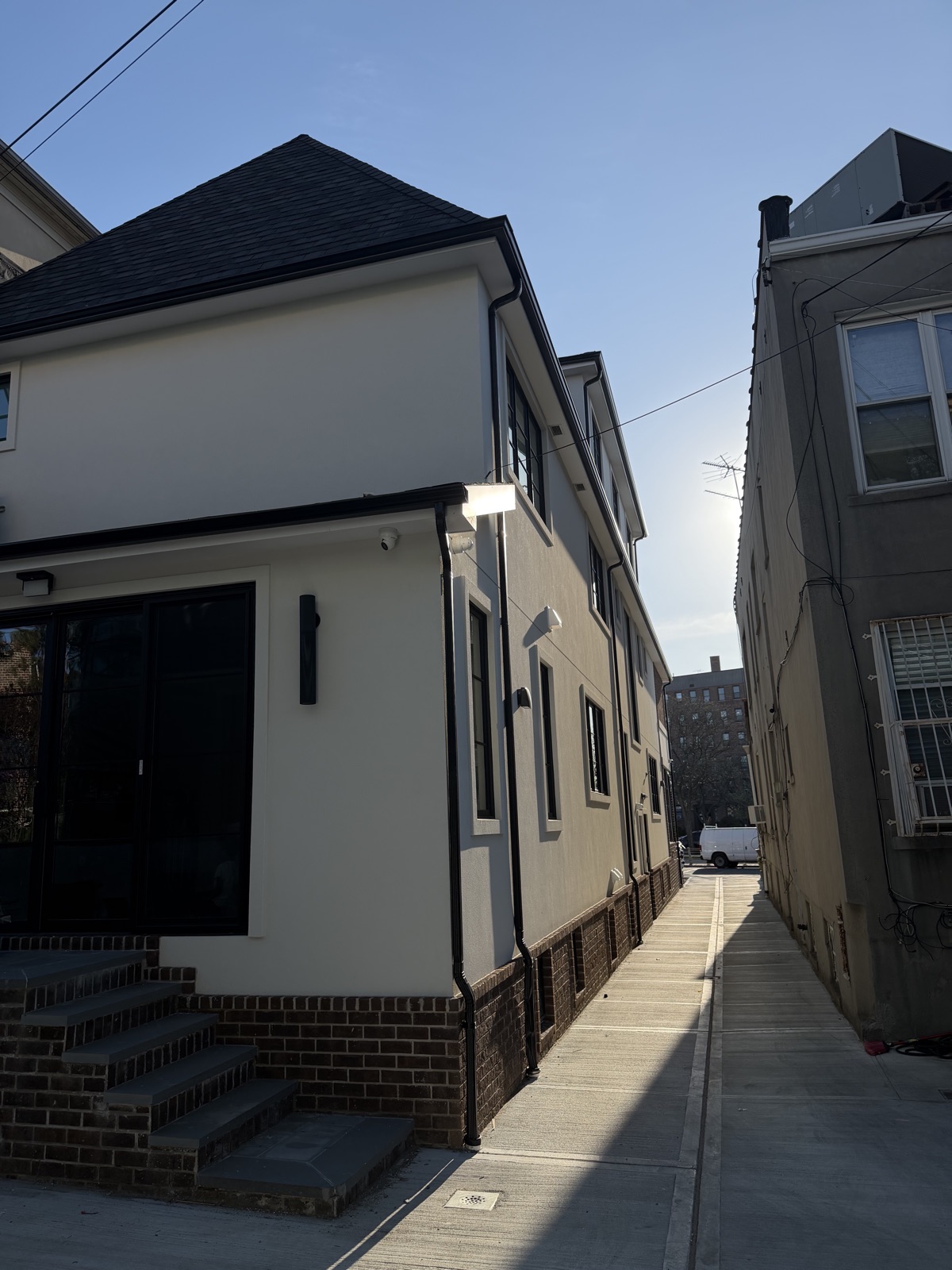
Two Different Problems That Look Identical
A damp patch on an interior wall in November is one of two things, and they need opposite fixes. Either warm indoor air is hitting a cold surface and condensing on it, or water is coming through the wall from outside. Treating one as the other wastes a season.
The reason both appear in the same week is that heating season starts the same week the weather turns wet and cold. Your boiler comes on, indoor humidity rises, outdoor temperatures drop, and the first long rain of the season soaks the wall. Both mechanisms switch on together, which is exactly why guessing does not work.
How to Tell Them Apart Without Opening Anything
Where it sits on the wall. Condensation forms on the coldest surfaces, which means corners, the top of an exterior wall where it meets the ceiling, and the strip behind furniture pushed against an outside wall. Water from outside enters at a specific failure and runs down. If the patch has a top edge and a tail running downward, that is water traveling. If it is a diffuse haze across a whole corner, that is condensation.
When it changes. Condensation is worst in the morning, after a night of closed windows and a running heating system, and it improves when you ventilate. Water from outside gets worse during and after rain, and does not care whether you opened a window. Note the date and the weather the next three times it appears. That record alone usually settles it.
What it smells and feels like. Condensation is surface wetness. You can wipe it and the paint underneath is intact. Water through the wall carries minerals out of the masonry with it, so it leaves a chalky white bloom, lifts the paint from behind rather than on top, and the plaster feels soft rather than just wet.
Which rooms. Condensation shows up in the wet rooms first: bathroom, kitchen, the bedroom with the window kept shut. Water through the wall shows up on whichever wall has the exterior failure, regardless of what the room is used for.
What on the Outside Causes the Inside Patch
If the evidence points outside, the entry point is almost never directly behind the damp patch. Water runs along framing and down the back of the stucco before it finds a way in, so the inside stain is usually lower and often several feet to one side.
The usual culprits on a NYC stucco wall, in the order we find them: the seal at the perimeter of a window or door, a crack wide enough to take water, the band at the bottom of the wall where the stucco meets the ground, the junction where the wall meets the roof or a parapet, and any penetration through the wall for a vent, a line set, a hose bib or an old AC sleeve.
The reason heating season exposes it is not that the wall got worse in October. It is that the wall has been letting a little water in all year, and in summer the wall dries faster than water enters. In November the wall never fully dries between rains, so what used to evaporate now accumulates and reaches the inside face.
Why Painting Over It Makes It Worse
Every year someone tells us they painted the damp patch with a stain blocking primer in the autumn and it came back through by January. It always does. The paint is on the dry side of a wall that is wet from the other side, so the water pushes it off from behind. Worse, a sealed interior face slows the only drying path the wall had left, so the wall holds more water than before you painted it.
The same logic applies to sealing the outside. Coating a wall that is already holding water traps it in. The sequence matters: stop the water getting in, let the wall dry out, then finish.
What We Do on the Inspection
We start outside on the elevation behind the damp patch and work upward, because water travels down. We sound the wall for drummy areas, look at every window and door perimeter, check the bottom band of the wall and the grade against it, look at every penetration, and look at the roof to wall junction and the parapet if there is one, because a surprising share of what gets called a stucco leak started above the stucco entirely.
Then we tell you which of the two problems you have. If it is condensation we will say so, and we will not sell you a stucco repair you do not need. If it is water coming through, you get a written scope showing the entry point and what the repair involves, at no charge.
What to Do This Week
Photograph the patch with a ruler or a hand next to it for scale, and date the photograph. Do it again after the next rain. If it grows after rain and not after a cold night, you have your answer before anyone arrives.
Move furniture off that wall so air can reach it. Do not paint it. Do not run a sealer on the outside wall. And if the patch is spreading, get the exterior looked at before the freeze, because water sitting inside a wall through a freeze does structural damage that water sitting in a wall in June does not.
MNM Construction Stucco covers Brooklyn, Queens, the Bronx, Manhattan, Nassau and Suffolk. Call (516) 713-9199 or (917) 570-7311.